How to Buy Used JDM Parts in Australia Without Getting Scammed
7 min read
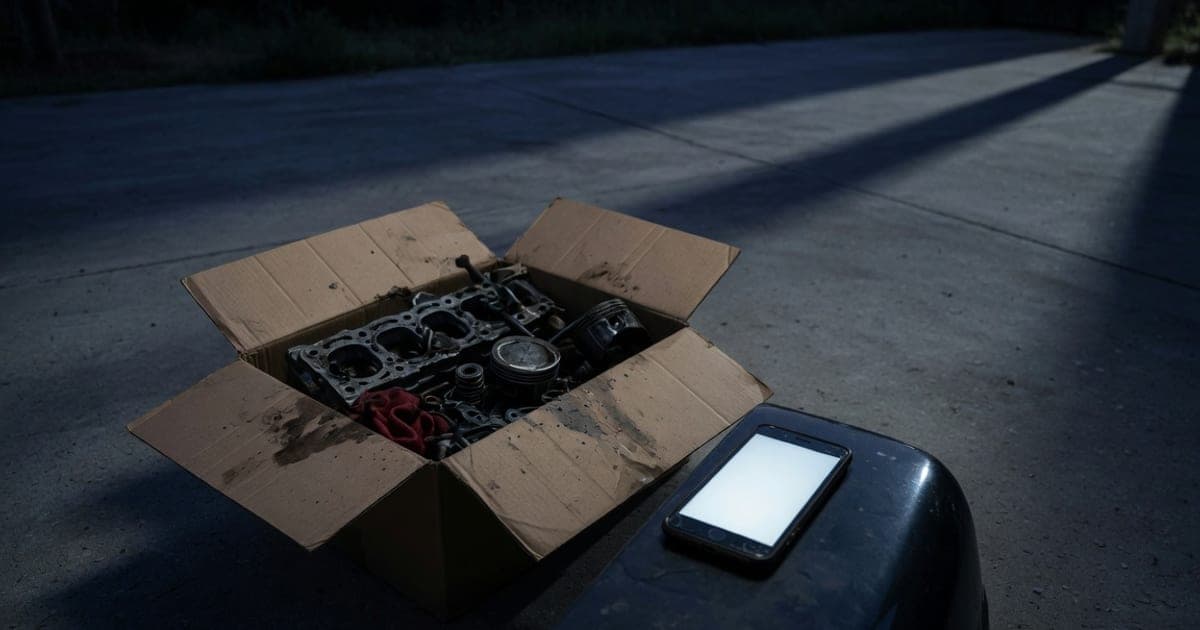
Short answer: never pay a deposit by bank transfer to someone you have not verified, never buy an engine you cannot hear run or see torn down, and always check that the photos belong to the seller. Do those three things and you avoid almost every scam running in the Australian JDM parts scene right now.
The long answer is worth reading, because the scams have evolved. They are not the obvious Nigerian-prince stuff anymore. They are patient, they use real photos of real parts, and they specifically target drifters and JDM owners because we buy expensive parts sight unseen from strangers interstate. An SR20 buyer in Perth wiring $500 to hold an engine in Sydney is a completely normal transaction, and the scammers know it.
The scams actually running in Australia right now
The deposit scam
This is the big one. A listing appears for an in-demand part at a slightly-too-good price. A 1JZ-GTE for $2,800. A set of Work Meisters in your size. A Nismo 2-way. You message, the seller is responsive and friendly, and because the part is in another state they suggest a deposit to hold it, or full payment plus freight.
The photos are real. They were just taken by someone else. The scammer lifted them from an old Gumtree ad, a Facebook group post from 2021, or an overseas forum. Once the transfer lands, you are blocked.
Red flags that stack up on deposit scams:
- The account is new, has no marketplace history, or has a profile full of shared memes and nothing personal
- The price is 20 to 30 percent under market. Not comically cheap, just cheap enough to make you move fast
- They cannot take a new photo on request. Ask for the part with today's date written on paper next to it. A genuine seller does this in two minutes. A scammer goes quiet or gets aggressive
- They push urgency. Someone else is coming to look at it this arvo, mate
- Payment must be bank transfer or PayID to a name that does not match the seller
The fake freight company
A variation where the "seller" agrees to ship, then a freight company you have never heard of emails you an invoice. The freight company is the scammer. Real interstate part freight in Australia goes through names you can verify: mainstream carriers, pallet services, or the buyer arranging their own pickup through a broker. If the seller insists on one specific unknown courier who wants payment upfront to a personal account, walk away.
The stolen parts problem
Not every dodgy deal is a scam against you. Sometimes the part is real, cheap, and stolen. Wheels and complete front ends off stolen S-chassis and Skylines end up in classifieds within weeks. Buying stolen goods can see the part seized with no compensation to you, and depending on circumstances you can be charged. If a seller has a $4,000 set of wheels for $1,200, no history, no story about the car they came off, and wants cash meetups in a car park at night, the discount is the risk.
The it-ran-when-pulled engine
Not a scam in the criminal sense, but the most common way to lose money. An engine advertised as a good runner, compression tested, low kays, turns out to be none of those things. There is no comeback on a private sale where you did not inspect. Treat every used engine as a core until proven otherwise, and price it that way, or verify before paying. More on that below, and what to check on an SR20DET before you pay works as a template for any used engine.
The verification checklist
Work through this before money moves. It takes fifteen minutes and it filters out nearly everything.
1. Reverse image search the photos
Right-click the listing photos and run them through Google Images or TinEye. If the same photos show up on an old ad, an overseas site, or someone else's build thread, you are done. This single step kills most deposit scams. It is also the first move on replica wheels sold as genuine, where the photos are often lifted straight from a manufacturer's catalogue.
2. Ask for a dated photo
"Can you chuck a bit of paper with today's date on the part and send a pic?" Genuine sellers never refuse this. It is the cheapest verification tool that exists.
3. Match the payment name to the seller
If you are transferring money, the account name should match the person you are dealing with. A mismatch is not always fatal, partners and business accounts exist, but it needs an explanation that makes sense, and it moves the deal into video-call territory.
4. Get them on a video call for big-ticket items
For engines, gearboxes, complete kits and wheel sets, a two-minute video call where the seller walks around the part answers almost every question. Scammers do not do video calls. While you are on it, ask them to turn the engine over by hand, show the turbo shaft, show the sump plug.
5. Engines get inspected or discounted
If you cannot inspect an engine in person or via a trusted third party, price it as an unknown. Typical Australian pricing reflects this: a verified, compression-tested SR20DET with video of it running commonly asks thousands, while a no-history long block sells for a lot less. If a seller wants verified-engine money without verified-engine evidence, the gap is your risk. For interstate deals, paying a local mobile mechanic an hour of labour to eyeball and compression test the engine before you pay is the best few hundred dollars you will spend.
6. Know the market price
Scam listings live in the gap between "bargain" and "obviously fake." If you know that used coilovers for an S13 typically trade in the high hundreds to low thousands depending on brand and condition, a $250 set of "MCA" coilovers reads as either fake, cactus, or bait. Browse current listings and sold prices in the community before you buy anything expensive, so your gut has data.
Why the platform matters
Most of these scams live on general marketplaces because the structure of those platforms helps the scammer. Anyone can post from a fresh account, contact moves straight to private messages or SMS, and there is no history attached to the listing. That is not a reason to avoid them, because that is where most of the stock is: how the two big platforms compare and an honest read on Gumtree both take them on their own terms.
A structured classifieds site changes the maths. On Drift Parts Classifieds, every enquiry runs through an on-site thread, so the conversation history exists somewhere the seller cannot delete, and seller accounts carry their listing history with them. A seller with ten past listings across suspension, wheels and tyres and engines, consistent photos, and a named business or username has put in more work than any scammer will. Registered businesses can attach an ABN, which is checksummed at entry, so a fake ABN cannot even be saved.
None of that replaces the checklist. It stacks with it. Read our safety page for the platform-specific guidance and our rules for what gets sellers removed.
Payment methods, ranked by how protected you are
- Cash on inspection. You saw it, you tested it, you paid. The gold standard for local deals.
- PayPal Goods and Services. Buyer protection exists and covers "significantly not as described." Sellers pay a fee and scammers avoid it, which is exactly why insisting on it works as a filter. Never accept a seller's request to use Friends and Family instead. That request is itself a red flag.
- Card payment through a platform. Chargeback rights apply.
- Bank transfer or PayID. No protection whatsoever once sent. Banks can attempt recall, but for scams the money is usually gone in minutes. Only transfer to sellers you have fully verified, and understand you are trusting them completely.
- Gift cards, crypto, Western Union. Nobody legitimate sells car parts for these. Ever.
If you do get stung
Report it to ReportCyber (the Australian Government's cybercrime reporting portal) and to your bank immediately, because a fast recall attempt occasionally works. Report the account to the platform. Then post the scammer's details in the relevant owner groups, because the same account usually runs the same part in ten cities at once and you will save someone else.
Do not pay a "recovery agent" who DMs you offering to get your money back. That is round two of the same scam.
Buy where the structure protects you
Every listing on Drift Parts Classifieds is free to post, tied to a seller profile with visible history, and every enquiry happens on-site where the thread cannot vanish. Buying from a wrecker with a shopfront is the other structural answer, because a business with premises and an ABN has more to lose from a bad sale than you do. Browse current listings, check the safety guide before your first big purchase, and if you are selling, list your parts free and let your history do the talking.