Drift Parts in Regional Australia: Newcastle, Wollongong, Geelong, Gold Coast, Toowoomba and Townsville
9 min read
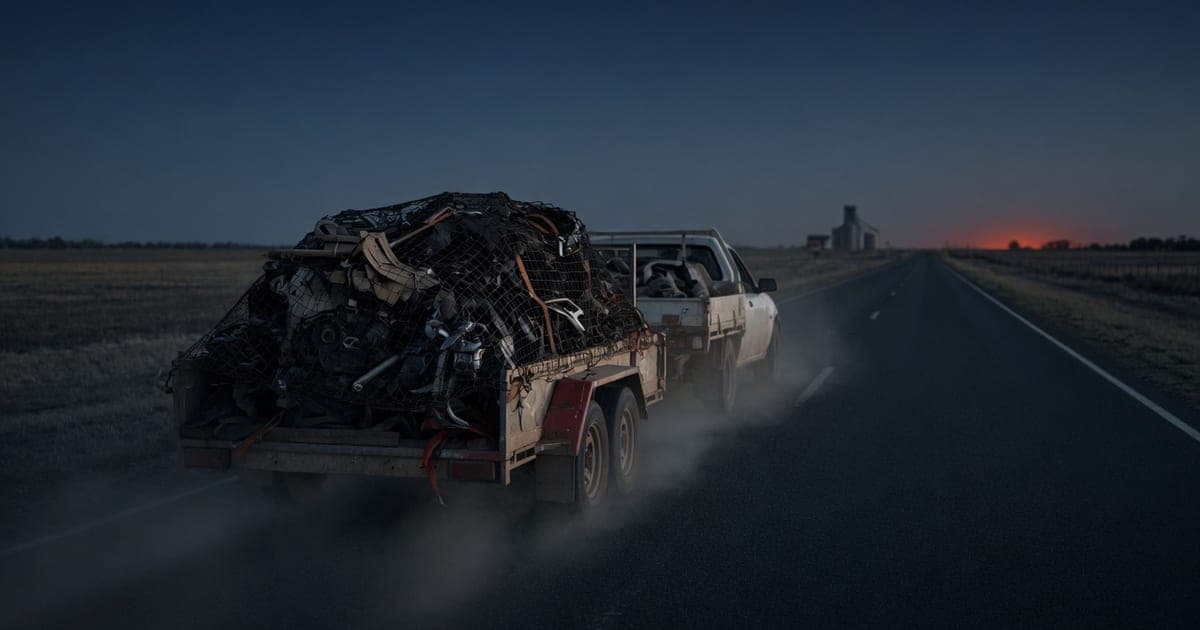
Short version: if you live in one of Australia's regional hubs, there is almost certainly no drift-specific parts yard in your town, and searching for one wastes weeks. The specialist JDM dismantlers and importers sit in Sydney, Melbourne, Brisbane and the Gold Coast, so the real skill for a regional buyer is buying interstate well: knowing what freights cheaply, what does not, how to consolidate, and how to get a quote before you agree a price. Here is the honest state of each of these six towns, the nearest place to actually drive the car, and how the freight maths works.
First, why your search results are so strange
If you have Googled "drift parts newcastle" or "drift parts geelong" and come away confused, you are not imagining it.
In Newcastle, the top results belong to Drift Bikes, a genuine family-owned bicycle shop serving Newcastle and the Hunter since 2003, with stores at Kotara and Newcastle West. Excellent at bicycles. Nothing to do with cars going sideways. In Geelong, the results fill with suppliers selling brass drift punches, hand tools for driving pins and aligning bolt holes. Also not what you are after.
Both happen because nobody has written the actual answer for these towns, so Google fills the gap with the closest word match it can find.
What all six have in common
None of these cities has a dedicated drift or JDM dismantler of its own. That is not a knock on any of them, just how a small specialist trade concentrates. Australia's JDM dismantling scene sits almost entirely in the east coast capitals, as our state by state wreckers directory shows.
So the regional pattern is identical everywhere: general wreckers locally for common mechanicals and crash panels, capital city specialists for anything chassis-specific, private sellers nationally for the enthusiast gear that never reaches a yard, and freight or a boot-load on your next city trip for the rest. What differs is how far you sit from a hub, and how good the local place to drive is.
Newcastle, NSW
The scene: strong, and always has been. The Hunter has deep car culture and plenty of built cars, but no permanent circuit anymore. The Newcastle Street Circuit that hosted the Supercars round closed in March 2023, and the old Newcastle Motordrome dirt track at Tomago has been gone since 2002.
Where you drive: south. Sydney Motorsport Park at Eastern Creek is the default, and the Australian Drift Club, running events since 2008, holds drift days there plus drag and drift nights at Sydney Dragway. Their events run from complete beginner upward, which makes them the standard entry point for anyone in the Hunter.
Where you buy: Sydney, close enough that this is barely a hardship. A couple of hours down the M1 puts you in the western Sydney industrial belt where most of the country's S-chassis and Skyline dismantling happens. Plan a pickup run rather than freighting: the drive costs less than a pallet.
Wollongong, NSW
The scene: healthy, and geographically the luckiest of the six. The Illawarra sits close enough to Sydney that the entire Sydney parts network is a day trip, not a freight job.
Where you drive: Sydney Motorsport Park to the north, or Pheasant Wood Circuit at Marulan to the south west, a 1.6 kilometre nine-turn circuit licensed by Motorsport Australia. It is primarily a track day and driver training venue with occasional club-level racing rather than a dedicated drift facility, but it is the closest bitumen of its kind to the Illawarra.
Where you buy: Sydney, same advice as Newcastle. If you are freighting anything into Wollongong you have probably overcomplicated it. Drive up, inspect it, pay, put it in the ute.
Geelong, VIC
The scene: Geelong sits in the shadow of one of the country's best drift scenes without quite being in it. The good news is geography: Victoria's main Nissan specialist dismantler is out at Ravenhall in Melbourne's west, on the Geelong side of the city. You never have to cross town.
Where you drive: the Victorian Drift Club, universally called VicDrift, runs events at Calder Park Raceway on Melbourne's north-western fringe and at Winton Motor Raceway near Benalla in the state's north east. They cater from beginners to advanced and most events are open to spectators. Calder Park is comfortably the closer of the two.
Where you buy: Melbourne for specialist stock, locally for general wrecker parts. Geelong's ordinary Japanese wreckers are fine for common mechanicals and useless for anything Kouki-specific, because scene parts get stripped long before a shell reaches a general yard.
Gold Coast, QLD
The scene: the strongest here by a wide margin, to the point where calling the Gold Coast regional is a stretch. A dedicated JDM wrecker and parts importer operates on the Gold Coast itself, one of the few businesses in the country whose entire model is dismantling JDM imports, and Brisbane's yards and wheel specialists are a short run north.
Where you drive: Norwell Motorplex is closest, a purpose-built driver training venue about 25 minutes from Surfers Paradise, with a 2.1 kilometre circuit, skid pan, motorkhana track and turntable. For drift specifically, Queensland Raceway at Willowbank near Ipswich is the one to know: it lists drifting among its activities and has a skid pad and drift facilities available for hire.
Where you buy: locally and in Brisbane. Gold Coast buyers have the shortest supply lines on this list and should be freighting almost nothing.
Toowoomba, QLD
The scene: a proper regional car town at the top of the range, with strong general motorsport culture and no drift-specific parts trade of its own.
Where you drive: Morgan Park Raceway at Warwick is the nearest circuit, owned and operated by the Warwick District Sporting Car Club, roughly 87 kilometres south of Toowoomba, with five layouts and a calendar spanning circuit racing, drag racing and dirt bikes. For skid pan drift days, the answer is down the range at Queensland Raceway, around ninety minutes away.
Where you buy: effectively, Toowoomba is a satellite of the Ipswich and Brisbane parts scene. The range descent is the only thing between you and Brisbane's wreckers, so the Newcastle advice applies: drive and collect rather than freight, and consolidate into one trip.
Townsville, QLD
The scene: the genuine outlier, and the most interesting story here. Townsville is more than 1,300 kilometres from Brisbane, which changes everything about how you buy. But the local scene has gone the other way and got substantially better.
Where you drive: DriveIt NQ at Calcium, about 50 kilometres south of Townsville, is a permanent motorsport and driver training facility on a 305 hectare site that opened in May 2023. It runs a 2.75 kilometre, 12-corner circuit plus a skid pan, and sealed access from the Flinders Highway opened in May 2026. It has hosted a Drift Matsuri, and Townsville Track Days runs drift sessions, track laps and test and tune days as North Queensland's main track day promoter. Reid Park in town hosts the Supercars round, but that is a temporary street circuit, not somewhere you will ever get a skid pan session.
North Queensland drifters now have a permanent home track, which most of regional Australia does not.
Where you buy: this is where freight stops being a detail and becomes the whole decision.
The freight reality for regional Australia
Interstate parcel and pallet freight runs through a handful of national networks: Australia Post for parcels, StarTrack as its business and express arm, TNT within the FedEx network, and Toll for interstate road freight and palletised shipments. Beyond those, regional line haul specialists cover the routes the big networks treat as an afterthought, particularly north Queensland, and locals will know who runs your corridor better than any comparison site.
The rule that explains everything: cubic weight
Freight is priced on whichever is greater, the actual weight or the cubic volume. This single fact explains most of the surprises regional buyers get, and once you understand it you can predict a quote before you request one.
It is why a dense 60 kilogram gearbox can cost less to send than a bonnet weighing eight kilos. The bonnet is mostly air, and air on a truck costs money. Plan around volume, not weight.
What ships cheaply
- Sensors, switches, ECUs, coils, brackets, gaskets, trim clips. Satchel or small carton, anywhere, modest money.
- Coilovers. Heavy but compact, so they price well. Same for calipers and master cylinders.
- Bucket seats. Bulky but light and robust, usually reasonable.
- Bare wheels without tyres. Awkward but manageable if properly boxed.
What does not
- Wheels with tyres fitted. The cubic jump is brutal. Buying or selling interstate, ask about them going bare.
- Body panels, bumpers, bonnets, doors and guards. Cubic monsters. A front bar can cost more to freight to Townsville than it cost to buy.
- Glass. Fragile, frequently excluded from damage cover, rarely worth the risk. Source it locally.
- Engines, gearboxes and diffs. Pallet plus forklift or tailgate access at both ends. Not expensive per kilo, but there is a floor price and it is not small.
- Complete cars, shells and half cuts. These need a car carrier or tilt tray, not a freight network. Our half cuts guide covers what moving one involves.
Six rules that save regional buyers money
- Get the freight quote in writing before you agree the price. The single biggest cause of dead deals. Settle the total landed cost, not the part price.
- Depot to depot, not door to door. On palletised freight the saving is significant, and most regional towns have a depot.
- Consolidate ruthlessly. One pallet with six parts costs a fraction of six consignments. Ask sellers whether they will hold parts to combine with a later purchase.
- Time your buying around trips. Everyone in these towns goes to the capital eventually, and a boot and back seat is free freight.
- Split freight with someone. Pooling an order with another local to share a pallet works as well as it sounds.
- Photograph everything on arrival. Unpack in front of your phone before signing anything off. Carriers only entertain damage claims lodged quickly with photos, and a diff dropped by a forklift looks fine until you spin it.
How regional buyers actually source parts
The practical hierarchy: private sellers nationally for coilovers, angle kits, aero, seats, LSDs and wheels, the deepest pool of drift-specific parts in the country and one no business holds. Capital city specialists for OEM parts where you want the whole assembly with its brackets. New parts from Australian brands, delivered, for anything that wears out or tunes. And local general wreckers for common mechanicals and crash panels, the underrated one: cheap, immediate, no freight. The full channel by channel map is in where to buy drift parts in Australia.
Verify hard before money moves on anything bought sight unseen, because interstate distance is what scammers rely on. The checklist is in buying used JDM parts without getting scammed.
Search by state, not by town
The most useful adjustment a regional buyer can make is to stop searching for their town and start searching their state and the ones next door, because that is where the stock actually is.
Filter the live listings to your own state to see what is close enough to collect, then widen out nationally for parts that freight well. The wheels and tyres listings narrow down to PCD, width and offset, because fitment here is a field rather than something you guess from a title.
Sitting on parts from a build that changed direction? List them free. Regional sellers do better than they expect nationally, because the buyer who wants your exact part was never going to be in your town. Be upfront about freight and you will get better enquiries.