Bucket Seats, Bride Copies and the Law: What's Actually ADR-Legal in Australia
6 min read
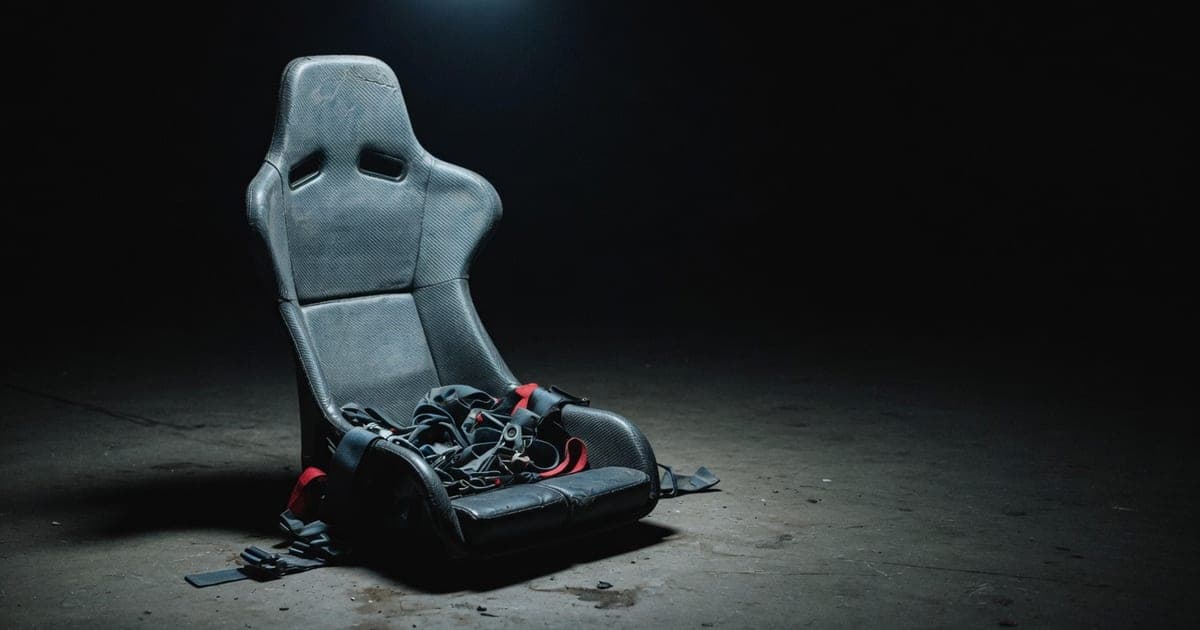
Straight answer: aftermarket bucket seats can be road legal in Australia, but in every state the legality comes from certified installation, not from the seat itself. There is no such thing as a seat you can buy that is automatically "ADR approved" for your car, no matter what a product page says. A quality seat, mounted on proper rails, with the installation certified by an engineer or approved person under your state's scheme, is legal. The same seat zip-tied onto home-made brackets is not, and it is also the thing most likely to hurt you in a crash.
Everything below is general information, not legal advice. The rules are state-based and they change, so confirm anything that matters with your state's transport authority or a certifying engineer before you spend money.
What the ADRs actually say
The Australian Design Rules are national standards that vehicles must meet at manufacture. The relevant ones for seats are ADR 3 (Seats and Seat Anchorages), plus the seatbelt and anchorage rules (ADR 4 and 5) where a seat change touches belt mounting, and the occupant protection rules on cars fitted with airbags.
Here is the part vendors blur: ADRs certify a vehicle as built. When you swap a seat, you are modifying a vehicle that was certified with its original seats. Whether that modification is acceptable is governed by your state's modification rules, which are largely built on the national code of practice for light vehicle modifications (VSB 14). Under those rules, replacing seats generally requires the installation to be assessed and certified, and that certification is what makes it legal. So "ADR approved seat" as a product claim is marketing shorthand at best. What a good seat manufacturer can genuinely offer is a seat built and tested to recognised standards that an engineer will be willing to certify. That distinction is the whole game.
FIA homologation is a separate thing again. It is a motorsport standard, it is what a race scrutineer cares about, and it expires (homologation stickers carry a validity date). FIA approval alone does not make a seat road legal, and road certification does not make it race legal. A seat can hold both roles, but through two different doors.
State by state, in practice
The structure is similar everywhere: minor accessory changes are fine, seat replacement needs certification, and the certifier decides what evidence they need about the seat and mounting.
- NSW: certification through the VSCCS scheme (a licensed certifier signs off the modification).
- VIC: a VASS approval certificate from a signatory.
- QLD: an approved person assesses the modification and fits a modification plate.
- SA, WA, TAS, NT, ACT: state approval processes with the same shape, generally an engineer's report or department approval for seating changes.
The practical consequence: before buying seats, ring a certifier in your state and ask what they will pass. Certifiers are the real gatekeepers, they vary in what documentation they want, and a ten-minute call before purchase beats owning a seat nobody will sign off.
Fixed-back vs reclinable, and the airbag problem
Reclinable buckets (Bride Brix and similar, Recaro sports seats, and the many reputable equivalents) are the easy road path. They keep adjustment, they mount on commercially made vehicle-specific rails, and certifiers deal with them constantly.
Fixed-back buckets are where it gets harder. Nothing in the national framework flatly bans them, but the bar rises: the mounting must be right, belt geometry must work, and some certifiers simply will not pass a fixed-back for road use, especially with a harness involved. Harnesses in road cars are their own can of worms, because a harness generally needs proper anchor points and, used without the right structure and angles, is worse than the factory belt. Many people run a fixed-back seat with the factory three-point belt, certified, and keep the harness for track days. Whether that combination passes depends on your state and your certifier, so again, ask first.
Airbags are the modern trap. On a car with seat-mounted side airbags or an occupant classification sensor in the seat base, swapping the seat removes or disables safety equipment the car was certified with. That makes certification much harder and on some cars effectively unavailable. This is rarely an issue on an S13 or JZX100; it is a real issue on anything recent. Check what your seat contains before it comes out.
Also worth knowing: a certified installation matters to your insurer. An uncertified seat is exactly the kind of modification an assessor looks for after a claim.
Steering wheels and quick releases, since they travel together
The same logic applies to the JDM steering wheel that usually accompanies a bucket seat. An aftermarket wheel (Nardi, Momo, Vertex and the like) on a car that came without an airbag is generally a straightforward, commonly accepted change, subject to size and horn requirements. On a car that came with an airbag, removing the airbag wheel removes certified safety equipment, and that is a serious certification problem in every state.
Quick-release boss kits are generally treated as not acceptable for road use in Australia. Between the removable wheel and the airbag deletion they usually imply, the widely applied position is track-only. Plenty of people run them anyway; that is a risk decision, not a legality one, and it is worth knowing which decision you are making. Nothing here is legal advice, but do not let a seller tell you a quick release is "engineered legal" without paperwork you can verify.
Buying a used bucket seat without getting burned
Used seats are one of the best-value corners of the secondhand market, and one of the most faked. Bride replicas outnumber genuine seats in circulation, and a replica shell is an unknown quantity in a crash. When buying used:
- Verify the seat is what it claims to be. Genuine Bride and Recaro seats carry serial tags, correct stitching and branded hardware, and the fabric patterns are documented. Compare against the manufacturer's genuine-product guidance. If the price is a third of what genuine seats bring, it is a replica regardless of what the listing says.
- Check the shell. No cracks around mounting points, no crash history, no soft spots in FRP shells. A dropped or crashed shell is done.
- Rails and side mounts matter as much as the seat. Vehicle-specific rails from a known maker are what a certifier wants to see. Home-made flat-bar adaptors are a fail and a hazard.
- Ask for paperwork, understand what transfers. A previous engineering certificate belongs to the car it was issued for, not the seat. It does not transfer with the seat, but it is still useful evidence that a certifier passed this model of seat before. What you actually need for your install is your own certification.
- Typical money: genuine used reclinable buckets from the big Japanese brands commonly trade in the high hundreds to low thousands depending on condition and rarity, fixed-backs similar, with collectable gradation fabrics above that. Replicas trade in the low hundreds. Price gaps bigger than that pattern are a signal, and our anti-scam guide covers the verification steps before you transfer money to anyone.
The order of operations that saves you money
- Ring a certifier in your state. Ask what seats and rails they will pass for your car.
- Buy the seat and vehicle-specific rails that fit that answer.
- Install properly, with rated hardware, no spacers or slotted improvisation.
- Get it certified, keep the paperwork in the glovebox.
- Tell your insurer.
Done in that order, bucket seats are a legal, certified modification. Done in reverse, they are a defect notice and an insurance argument waiting for a rainy night.
Find the seat first
Browse the current listings for buckets, rails and wheels with fitment stated up front, and message sellers through on-site threads where the claims stay on record. Got a genuine seat gathering dust since the last build sold? List it free, because someone is searching for exactly that shell this week.