BorgWarner 78 Diff Interchange: R31 Skyline, Falcon and Commodore, and What Actually Swaps
8 min read
Here is the short version of an interchange that only makes sense in Australia. Nissan built the R31 Skyline here with a locally sourced live rear axle instead of the Japanese independent rear end, and the diff they put in it is the same BorgWarner banjo family that lived under Falcons, VL Commodores and VN to VS Commodores. That means an R31 owner shops Holden wrecking yards, a Torana builder shops Nissan ones, and a Pintara nobody wanted is worth real money for the gears inside it. It also means four different housing widths, two spline counts, two crownwheel sizes and three incompatible stud patterns are all sitting in the same pile at the swap meet wearing the same name. This is what actually swaps, and every claim below is tagged so you can tell a factory specification from a forum consensus.
How to read the tags
- [OEM-DOCUMENTED] traceable to a factory specification or manufacturer parts data.
- [COMMUNITY RULE-OF-THUMB] consistent across builders, marque forums and specialist workshops, with no factory document behind it.
- [CONTESTED] credible sources disagree.
- [NOT VERIFIED] we could not source it, and say so rather than dropping it.
Be aware that almost everything in this article sits in the middle two buckets. There is no public Nissan Australia or GMH engineering document circulating that settles these questions, which is precisely why the knowledge lives in twenty-year-old forum threads. That is not a reason to skip it. It is a reason to label it.
Why an Australian Nissan has a Holden diff
Local content rules and cost. The Japanese R31 was offered with a four-link live axle or a semi-trailing arm independent rear, and the upper hardtops carried early HICAS rear steer. Nissan Australia dropped all of that and specified a five-link live rear axle with a Panhard rod, along with locally sourced brakes and steering, on both the R31 Skyline and the R31 Pintara. [COMMUNITY RULE-OF-THUMB, consistent across marque club documentation and period Australian press]
The axle they used is the BorgWarner banjo, the same basic unit under a very large share of Australian rear-drive production from the seventies onward. So the question "what fits my R31" is really "what fits a BorgWarner", and the answer spans three brands.
The naming fight, which you have to understand before shopping
The single most contested claim in this whole topic is whether the Commodore units are BW78s at all. [CONTESTED]
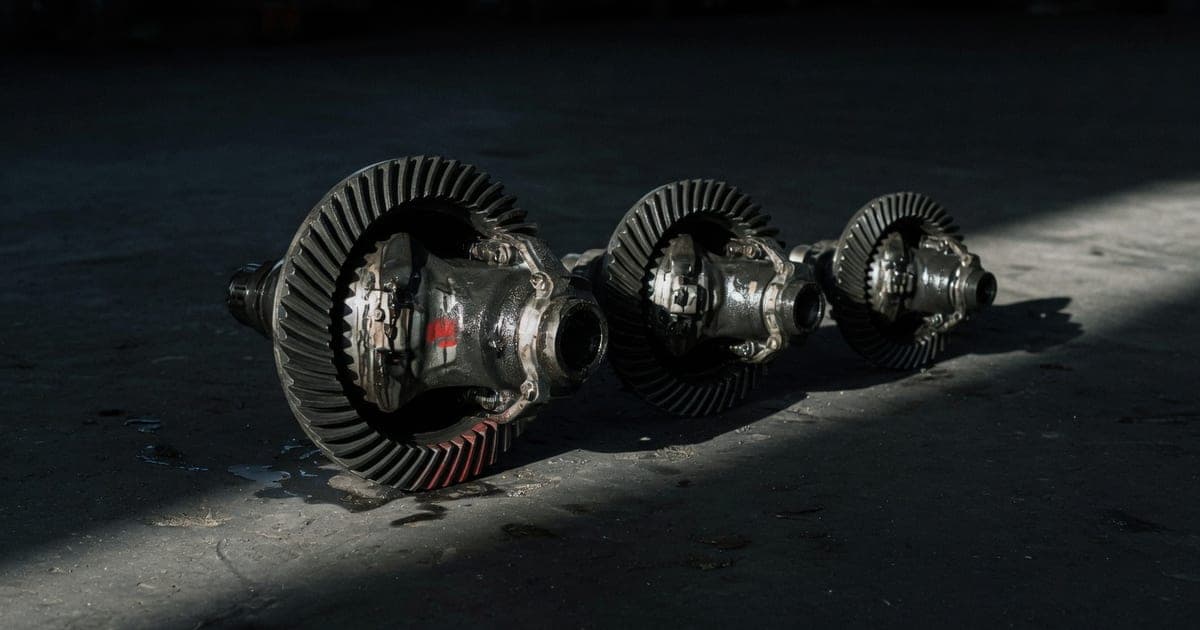
Experienced builders point out that the Commodore and Skyline diffs run a 7.5 inch crownwheel, and that aside from oddballs the VK to VS BorgWarner and BTR units are stamped M75 or 0575 on the crownwheel, not 78. On that reading, the "BW78" label got attached to Commodores because the centres changed from 25 spline two spider to 28 spline four spider, and people assumed a change of series rather than a change of centre. Meanwhile the genuinely 7.8 inch units, with a larger crownwheel and different pinion bearing, are the 28 spline Falcon items, and they need their own main housing.
Against that, Street Machine's own tech coverage describes the 78 series simply as the stronger successor to the 75 with all 78s running 28 spline axles and fewer ratio choices, and Holden's parts trade has called them BTR 78 for decades because BTR took over the manufacture from BorgWarner.
What you do with the disagreement is practical: never order a gearset on the strength of the badge. The two series differ in crownwheel and pinion mesh geometry, and the workaround the trade uses is shimming the drive pinion by roughly 0.120 inch to run 75 series gears in a 78 series housing. That works, some very experienced people are sceptical of it, and none of it is something you want to discover after the gears arrive. Pull the cover, read the crownwheel stamp, then buy.
Housing widths, which is the real limit
Flange face to flange face, the numbers that circulate are:
| Housing | Width | Provenance |
|---|---|---|
| VL Commodore, including Turbo | 1400mm | [COMMUNITY RULE-OF-THUMB] |
| R31 Skyline and Pintara | 1410mm | [CONTESTED], one source measures 1450mm |
| VN Commodore onward | 1440mm | [COMMUNITY RULE-OF-THUMB] |
| Falcon XK to XM, for scale | 1432mm | [COMMUNITY RULE-OF-THUMB] |
| Falcon EF and EL | 1557mm | [COMMUNITY RULE-OF-THUMB] |
The R31 figure is the one to treat carefully: 1410mm and 1450mm both appear from people who claim to have measured, which is a 40mm disagreement and a wheel-fitment problem, not a rounding error. Measure the housing you are actually buying.
Two useful consequences. First, the VL is the narrowest Commodore BorgWarner, which is why it turns up in narrow-bodied conversions. Second, axles can be shortened by roughly 10 to 12mm and still hold adequate spline engagement, but past that you are cutting the spline deeper and you run out of machined section. [COMMUNITY RULE-OF-THUMB]
Splines, spiders and what is actually strong
| Donor | Centre | Axles | Factory ratio |
|---|---|---|---|
| R31 Skyline | 4 spider | 28 spline | 3.7 manual, 3.89 then 3.91 auto |
| R31 Pintara | 2 spider | 25 spline | 4.11 |
| VL Turbo | 4 spider | 28 spline | 3.45 |
| VL V8 | 4 spider | 28 spline | 3.08 |
| VN to VS, VT Series 1 | 4 spider | 28 spline | 3.08 standard |
| VK injected six | 2 spider | 25 spline | 3.23 |
All [COMMUNITY RULE-OF-THUMB], cross-checked across three independent Australian forum archives that agree with each other.
The 25 spline two spider centres are the weak ones, and they are what most VLs, many Valiants, a lot of Falcons and the Pintara carry. The four spider 28 spline setup is what you want, and the R31 Skyline and the VN onward Commodores both have it, which is a large part of why those two donors are the ones people chase.
This is also the reason a Pintara is worth buying and immediately throwing half away. The axles and centre are the light ones, but the crownwheel and pinion is 4.11, the shortest ratio in the family, and the gears interchange. Note one wrinkle: the 4.11 Pintara gearset is reported to be a 75 series and the 78 was never made in that ratio, so the pinion mesh question above lands directly on the most popular swap in the whole topic. [CONTESTED]
The stud pattern trap
Three brands, three patterns, and they are close enough to force together and far enough apart to break studs.
- Commodore: 5x120 [COMMUNITY RULE-OF-THUMB]
- Falcon: 5x114.3 [OEM-DOCUMENTED]
- HQ to WB Holden: 5x120.65, the imperial Chev pattern [OEM-DOCUMENTED]
People have run Commodore wheels on HQ hubs and snapped all five studs on one corner. Rotors can be redrilled, but changing the pattern on an axle flange is not a redrill job, which is why custom or billet axles are the usual answer when a swap crosses brands. The full per-chassis pattern list is in the chassis reference table.
The other traps
It is not an M80. The 80 series in late model independent-rear Falcons and Commodores is a Dana derived unit and shares nothing with the 75 or 78. [COMMUNITY RULE-OF-THUMB] If you are shopping a VE or VF, you are in a different article entirely: the VE and VF Commodore diff guide.
Body style changes the housing, not the gears. Sedans, wagons and utes share the same BorgWarner family, but wagon and ute housings carry different shock and Panhard rod mounting points, so those housings do not drop into a sedan. Centres and gearsets still interchange. [COMMUNITY RULE-OF-THUMB]
Condition is the real risk. Falcon centres have a reputation for being noisy and tired, and R31 Skyline and Pintara units are widely reported as worn or badly set up from new. There is a persistent claim that you should only buy an R31 diff from a car carrying a factory recall sticker in the door jamb. We could not source that recall. [NOT VERIFIED]
Power ceiling is guesswork. Published opinion runs from 350hp to 500hp, and VL Turbos are documented making well past 500hp on standard BorgWarner hardware without failing. The gearset, and particularly the pinion, is the weak point, and there is no stronger aftermarket gearset for it. [CONTESTED]
No internal drum. The R31 runs rear discs with the park brake acting on the pads, which is marginal as a handbrake and useless as a drift handbrake. Budget for a hydraulic handbrake rather than expecting the factory one to do anything. [COMMUNITY RULE-OF-THUMB]
What to buy, and in what order
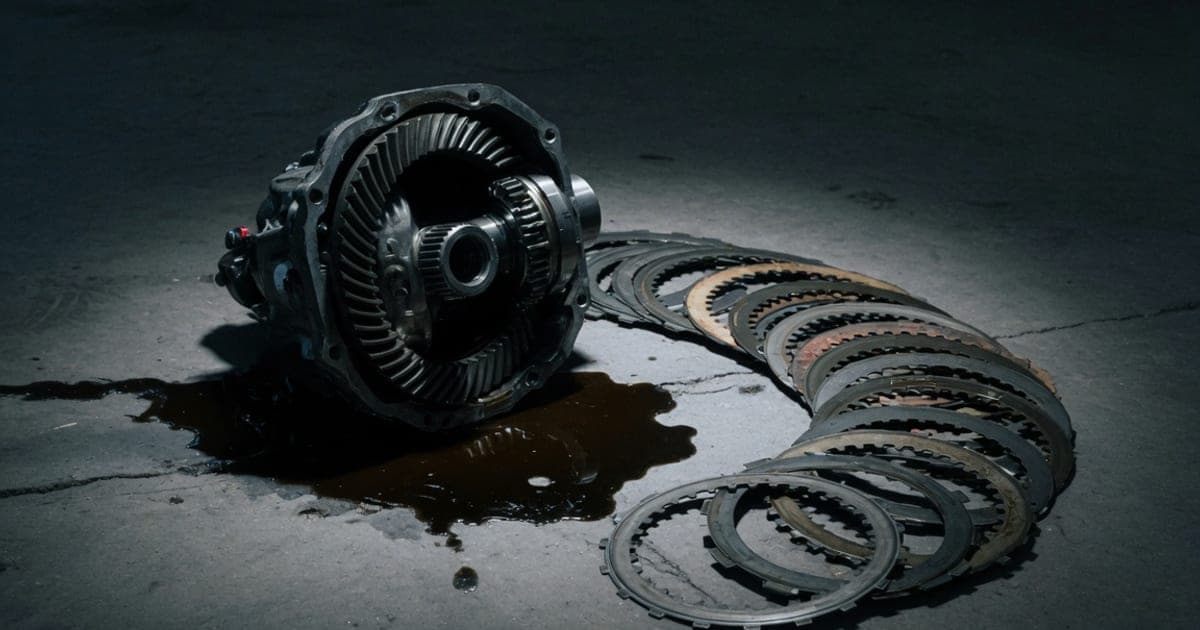
The factory limited slip in these is a cone type, and the cone units in the smaller centres are reported to wear out faster than the big Salisbury equivalents. Swapping a centre is the easy job, especially with a diff spreader. Changing ratios is the involved one, because it means setting crownwheel and pinion properly, which is a job for someone who has done it before. So the sane build order is: get the right housing width for your car first, then a four spider 28 spline centre, then worry about ratio last. What ratio to actually choose, with the speed-per-gear arithmetic done for you, is in choosing a final drive ratio for drifting.
If your car is an independent-rear Nissan rather than a live-axle one, none of this applies and you want the R180 vs R200 vs R230 interchange guide instead.
Buying one: ask for the crownwheel stamp, the spline count off the axle, the housing width measured flange to flange, and which car it came out of. Then go looking in the drivetrain listings for complete housings, centres and gearsets. Got a Pintara centre or a spare VL housing gathering dust? List it free with the ratio and spline count in the title, because that is exactly what the next R31 owner is searching for.