VE and VF Commodore Diff Guide: Ratios, Factory LSD vs Open, and What Used Ones Cost
9 min read
Short version: VE and VF Commodores run what the trade calls the ZF diff, an alloy-cased 32-spline centre sitting in the independent rear end, and it shares nothing with the M80 that VT to VZ cars used. Factory ratios you will actually meet are 2.92, 3.27, 3.45 and 3.70, and both the ratio and whether it left the factory as an LSD are printed on a sticker under the housing, so you never have to guess. V8 SS, SS-V and every HSV came with a limited slip diff; base V6 cars are open. Used complete diffs typically trade around $300 to $700, and if you are building a drift car the aftermarket answer is a clutch-type centre, not the torque-biasing one that every street-car forum recommends.
What is actually in there
Two bits of Commodore folklore need killing before you shop, because both cost people money.
First: independent rear suspension did not arrive with the VE. It appeared on higher-spec VP to VS models, became the standard fitment at the VT in 1997, and ran through VX, VY and VZ. What the VE changed in 2006 was the design of that rear end and the diff inside it, so "IRS Commodore" covers VT onward, not VE onward.
Second: the VE and VF centre is not an M80 and not a Salisbury, the older VT-VZ and VB-VL units respectively. It is a separate alloy-cased design on 32-spline outputs bolted into the rear subframe, catalogued by every driveline shop as its own "VE/VF (ZF)" family. Nothing from a VZ fits it. If a seller lists a VE part as an M80, find out what else they have wrong.
One refinement on that VB-VL grouping, and it matters if you are shopping the early cars: the VL itself moved to a BorgWarner banjo rather than staying on the Salisbury, which is what puts it in the same parts pool as VN to VS Commodores, Falcons and the Australian-built R31 Skyline. That whole interchange is mapped in the BorgWarner 78 guide.
One flag before you order any upgrade centre: the supercharged LSA cars sit outside the standard product lines, and both Harrop and Kaaz explicitly exclude them.
The ratio table
| Ratio | Where it came from |
|---|---|
| 2.92 | V8 auto. Early VE SS autos and V8 Calais |
| 3.27 | V6 cars, VE HSV autos, and widely reported as the SS auto ratio by VF Series II |
| 3.45 | SS and SS-V V8 manual, VE through VF Series I |
| 3.70 | HSV manual across VE and VF, and widely reported as the mainstream SS manual ratio from VF Series II |
| 3.90 | Aftermarket ring and pinion. Not a factory Commodore ratio |
| 4.11 | Aftermarket ring and pinion. Not a factory Commodore ratio |
Two things fall out of that. The manual cars always got the shorter gear, and the late VF cars are widely reported to have shortened again, putting a VF Series II SS manual on the ratio that used to be HSV-only. That is well supported by owner reports, but not worth betting a purchase on. Check the sticker rather than the model year.
The 3.90 and 4.11 figures appear on the parts-family tag and throughout the re-gear catalogues, which is how they end up in listings, but no factory Commodore came with them. If a seller says their VE SS left the factory with 4.11s, somebody has already changed the crownwheel and pinion. Not a problem, but it changes what you are buying.
For a drift car the ratio question is simple. A shorter ratio spins the rears up more readily and tightens the gears, which suits a heavy car on a small track, while a 2.92 is a highway gear that makes second-gear entries lazy. Take a 3.45 or a 3.70 and stop thinking about it. Re-gearing purely for drift is money that belongs elsewhere first.
Reading the ratio off the car
There is a GM sticker on the underside of the housing giving the part number, the ratio and whether an LSD was fitted, plus a metal tag near the drain bolt on LSD units. Australian-delivered Commodores have no public VIN or option-code lookup, so that sticker is the practical method.
If it is long gone, count it out. Mark the tailshaft flange and a rear wheel, jack both rear wheels clear, then turn the tailshaft and count the turns it takes to rotate the wheels once. Roughly three and a half is a 3.45, roughly three and three quarters a 3.70.
LSD or open: how to tell for certain
SS, SS-V and every HSV variant came with a factory limited slip diff. Base V6 Omega and Evoke cars are open. The V6 sports variants sit in a grey area depending on year and options, so do not treat a badge as proof of anything.
If the sticker is unreadable, do the spin test, and do it properly, because the commonly repeated version of this test gives false results:
- Jack both rear wheels off the ground. One wheel up tells you nothing at all.
- Put the car in neutral. Not Park, not in gear. A locked tailshaft makes every diff ever built behave like an open one, and this mistake is why so many people believe their SS came out open.
- Spin one rear wheel by hand. Same direction at the other wheel means LSD. Opposite direction means open.
One wrinkle when buying: a worn factory LSD can fail the spin test and behave exactly like an open diff, because tired clutch packs go progressively more open the harder you drive, which is precisely when you wanted them. A diff that spins open is not proof it left the factory open, and a high-kilometre factory LSD is a core, not a finished product. Price it that way.
The upgrade paths
Both of the real options drop a new centre into the standard housing, so this is a centre swap rather than a whole rear end.
Harrop Eaton Truetrac
Harrop is a Melbourne company with a long Holden motorsport history, and its Truetrac is the default upgrade here: a helical gear-type LSD on an 8-pinion gearset, sold as a centre only, so ring and pinion and bearings are extra. It covers VE and VF including HSV but not the supercharged cars, and Harrop lists it around $1,625.
Now the part most VE diff articles leave out. Truetrac is the right answer for a fast street car and the wrong answer for a drift car. Gear-type diffs bias torque toward the wheel with grip, which is superb when both tyres are loaded and close to useless the instant an inside rear goes light, which a drift car does in every corner. They also cannot deliver the decel-side lock that makes entries repeatable. The full reasoning is in 1.5-way vs 2-way LSD for drifting.
Kaaz clutch-type
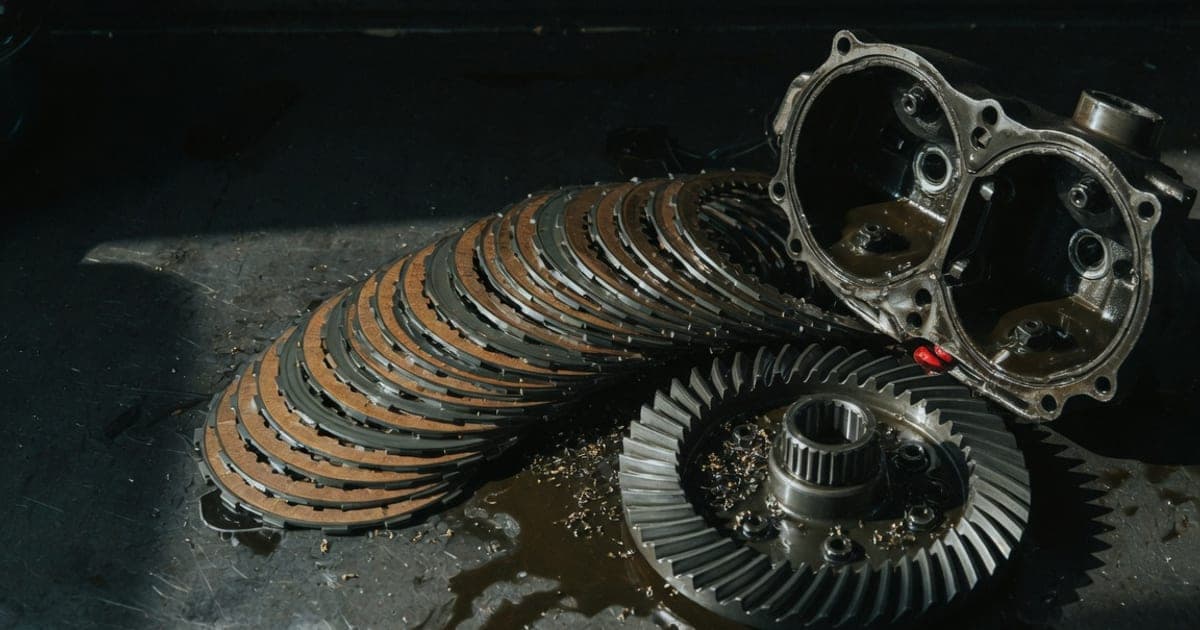
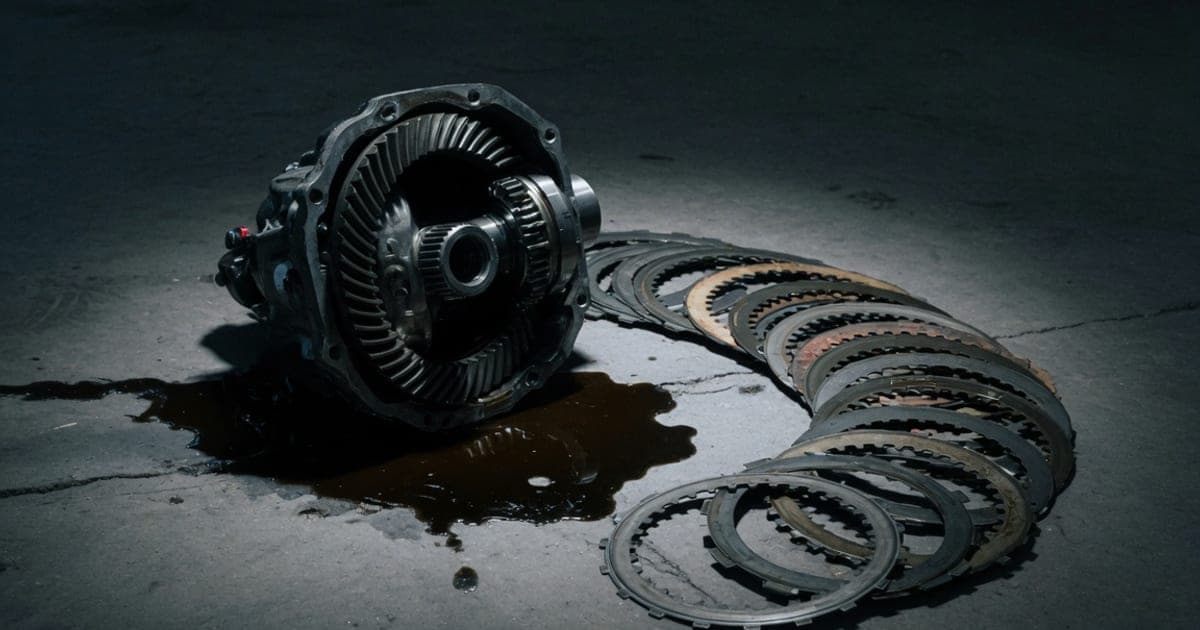
Kaaz makes a clutch-type LSD specifically for the VE and VF housing, which surprises people who file Kaaz under Nissan and Toyota. It is a 2-way unit on 16 plates with 60 by 60 degree ramps, set up from the factory for full lock, distributed here and stocked by the mainstream driveline shops. It typically lists around $1,850 and, like the Truetrac, excludes the supercharged cars.
That is the drift answer for this chassis: symmetrical lock on and off the throttle, plate stacks you can rebuild rather than replace, and behaviour you can predict when the inside rear unloads.
Rebuild the factory centre
The option most people skip. The factory LSD runs a clutch pack, and a reconditioned unit with fresh plates and genuine seals comes back from a driveline shop around $1,680. That makes sense in one common situation: you already own a good housing and crownwheel and only the plates are cooked.
The welded option
The traditional budget answer, and it works here too, with the usual caveat that it is not road legal anywhere in Australia and it is the point your car becomes a track car. General information, not legal advice. Weld a spare open V6 centre rather than your good SS one, and have it done by someone who has done it before.
VE vs VF, from the diff's point of view
Treat them as one family. The housing architecture, the 32-spline outputs and the parts catalogues run continuously from VE to VF, which is why shops list everything as "VE/VF (ZF)" rather than splitting them. The documented difference is gearing, not hardware. No housing or bearing redesign at the changeover turned up in research, so treat a VF centre as a VE centre that may have a different ratio in it, and check the sticker.
The whine, honestly
Diff noise on these cars is a real and repeated owner complaint, but two different faults get filed under one word and they carry different bills.
The first is LSD clutch pack wear: the fibre-faced plates wear out, you get a knock on lift-off, and the lockup progressively disappears. This is reported on VE SS cars around the 100,000km mark and has been diagnosed by Holden dealers, so it is more than forum noise. The second is genuine gear whine, a hum that rises and falls with road speed, caused by pinion bearing preload or ring and pinion wear. That afflicts every hypoid diff ever made and Commodores have had it since the live-axle days.
No manufacturer bulletin or recall for either turned up, so anyone calling it a known factory defect with a factory fix is overstating it. Treat it as a wear item: a negotiating point in a car you are buying to drift, since you are going into the centre anyway, but a bill in a car you intend to drive daily. Before you condemn any centre, check the mounts: these rear ends crack around the diff mounting bolts on cars that have seen axle tramp, and worn bushes make noises that sound exactly like a dying diff.
What used ones cost
Real asking-price territory in Australian classifieds at the time of writing, with the standard caveat that listings churn weekly and condition moves everything:
- Bare housing, no internals: typically $135 to $225.
- Complete used diff out of a wrecked car: typically $300 to $700, with the full spread across ratios and kilometres running from about $200 up to $1,100. A late, low-kilometre VF SS centre with a legible sticker sits at the top.
- Professionally reconditioned factory LSD: around $1,680.
- New aftermarket centre, Harrop Truetrac or Kaaz: roughly $1,625 to $1,850 for the centre alone, before ring and pinion, bearings or fitting.
- New genuine complete GM assembly: north of $4,000, which is why nobody buys them.
The gap between a $450 used diff and a $4,000-plus new assembly is the whole argument for buying secondhand. Ex-wreck Commodore driveline is one of the deepest parts pools in the country, which is a big part of why the platform is such good value to build. Where diff money sits against everything else is in what a drift build really costs in Australia.
Buying one without regretting it
Ask for a photo of the sticker or tag, not just the diff, and get the ratio confirmed by turn count if it is gone. Ask whether it came out of a manual or an auto, since that alone tells you the likely ratio. Turn the input flange by hand and feel for notchy bearings and slop, and look for weeping seals, cheap to fix but a sign the unit sat or ran hot.
Buying interstate and unseen brings the usual rules, worth reading before money moves: how to buy used parts without getting scammed.
Find one
Have a look through the current listings for complete VE and VF diffs, LSD centres and gear sets, and for a whole donor Commodore if that turns out to be the cheapest route to a good diff, which it frequently is. Got a spare Truetrac, Kaaz or factory LSD centre on the shelf? List it free with the ratio and the kilometres in the title, because that is what buyers type into the search box. The diff is one line item out of many: building the rest of the car covers where the money goes after it.