Soarer and Supra as Drift Cars in Australia: Why the Soarer Is the Smart Buy Now
7 min read
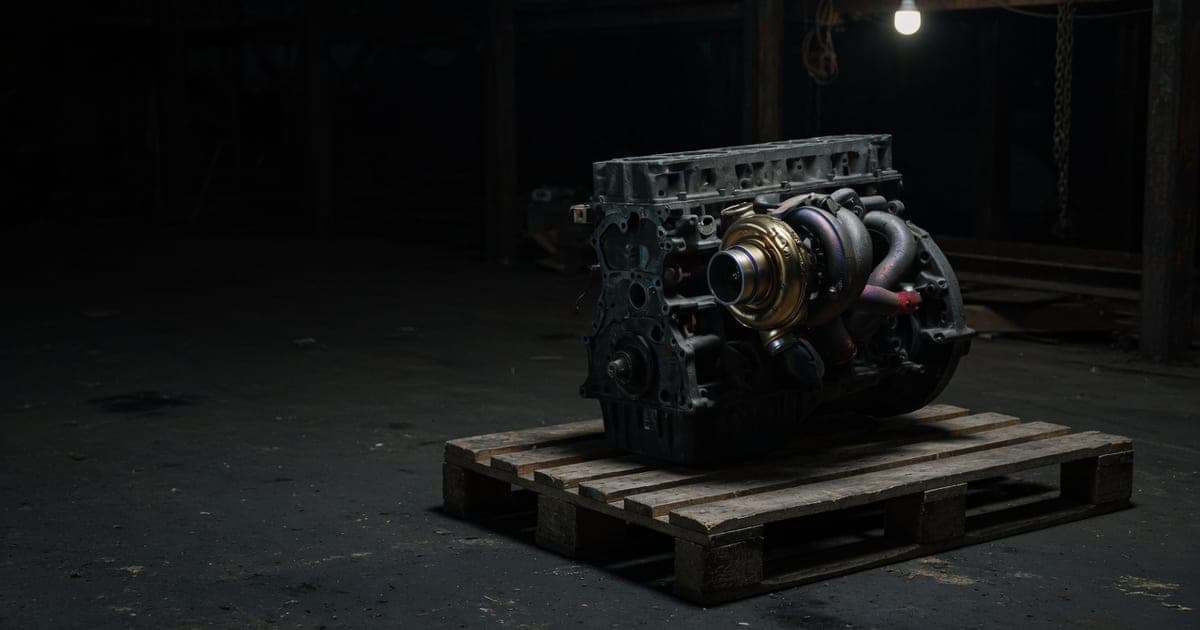
Short version: if the plan was to drift a Mk4 Supra, price one first, because JZA80s have left drift-budget territory entirely and now trade as collector cars. A JZZ30 Soarer runs the same 1JZ engine family, weighs about the same as a Supra once you account for the fact both are heavy Toyota GT cars next to an S-chassis, and costs a fraction of the money. This is the honest case for buying the car nobody is chasing on Instagram instead of the one everybody is.
The lineup: Soarer and Supra, generation by generation
Soarer Z30 (1991 to 2000)
The JZZ30 runs the 1JZ-GTE turbo six or the naturally aspirated 1JZ-GE. The UZZ30, UZZ31 and UZZ32 run the 1UZ-FE V8 instead, naturally aspirated only, no factory turbo V8 option. For drift, the JZZ30 turbo is the one people actually want; the V8 cars are heavier again and mostly interesting to people specifically chasing a V8 swap platform rather than the six.
Supra JZA70 (1990 to 1993)
The JZ-engined tail end of the Mk3 Supra's life, running the 1JZ-GTE or 2JZ-GTE alongside the more common 7M-GE and 7M-GTE cars that dominate the rest of the A70 run. Genuinely scarcer than the 7M cars, and worth confirming exactly which engine is in any JZA70 you are looking at before you assume anything from the badge.
Supra JZA80 (1993 to 2002)
The Mk4. Naturally aspirated 2JZ-GE or the twin turbo 2JZ-GTE, the engine that turned this car into the internet's favourite. The desirability order for drift is straightforward: JZA80 twin turbo at the top, JZZ30 turbo Soarer next, JZA70 turbo third, naturally aspirated versions of any of them last.
What these actually cost in Australia right now
This is the part that changes the whole conversation, and it needs saying plainly: the Mk4 Supra is no longer a drift car budget by any reasonable definition. Recorded Australian auction results for JZA80s average in the mid $50,000s, with a real range from the low $30,000s up past $100,000, and clean twin turbo manual cars are regularly clearing $65,000 to $90,000 and beyond. That is collector car money. You can build an entire comp-spec drift car in a different chassis, buy a season's worth of tyres, and still have change, for the price of a single tidy Mk4.
The JZA70 sits meaningfully below that, which surprises people who assume "older Supra" means "cheaper Supra" by a small margin rather than a large one. Twin turbo automatic JZA70s have shown up around the high teens to mid twenties, with the wider market stretching well beyond that for exceptional or rare-spec examples, but as a rough anchor it is a different, more reachable conversation than the Mk4.
The Soarer JZZ30 is the affordable one of the three. Turbo automatic examples commonly turn up in the mid teens, noticeably under Mk3 Supra territory and nowhere near Mk4 money, for the same 1JZ-GTE engine family underneath. Exceptional low-kilometre or rare-spec cars will always sit above any rough range like this, so treat these as the shape of the market rather than a quote, but the direction is clear: Soarer money buys you the JZ platform experience that Supra money used to buy before the culture caught up with the car. That tracks with how the wider market already treats these cars: our guide to best first drift cars you can actually buy in Australia already flags the Soarer as the cheaper option next to a JZX100 for a similarly big, stable import.
1JZ versus 2JZ: which to run, and what they actually cost
Both engines are plentiful in Australia as standalone units, because both came out of high-volume donor cars: the 1JZ out of Chasers, Crestas, Mark IIs and Soarers, the 2JZ mainly out of Aristos. Bare long motors can be found cheap, but a complete engine with its own loom, ECU and ancillaries costs meaningfully more, the same completeness premium that applies to every JDM engine swap; see the full breakdown of what a proper 1JZ-GTE setup runs in Australia in SR20 vs RB25 vs 1JZ. The 2JZ commands a real premium over that again, and Supra hype has pulled every JZ-badged part upward with it, the 2JZ more than the 1JZ. Where the engine ends up matters as much as which one you buy, and dropping one into an IS200 is one of the cheaper landing spots in this country.
The VVTi versus non-VVTi question, which comes up constantly for both engines, is a wiring and tuning distinction rather than a strength one: VVTi versions run three coil packs instead of six, a different crank sensor and trigger setup, and a smaller intake plenum, but the rods and bottom-end internals are essentially unchanged either side of the VVTi line. What is a genuine strength difference is 1JZ versus 2JZ: the 2JZ-GTE has better head port flow than the 1JZ-GTE, meaningfully stronger factory internals, and that is the real reason it is the more sought-after engine once you are chasing serious power, not the VVTi question people usually blame.
The weight problem
Neither of these cars is light, and neither one is meaningfully lighter than the other, which surprises people who assume the smaller-looking Supra must be the lighter car. Factory kerb weights put the Soarer JZZ30 around 1,550 to 1,610kg depending on variant, and the Supra JZA80 around 1,440 to 1,560kg depending on trim and gearbox, with naturally aspirated autos at the light end and manual twin turbos at the heavy end. For contrast, an S13 sits around 1,170 to 1,270kg. The real gap is not Soarer versus Supra, it is either of them versus an S-chassis: both Toyota GT cars carry roughly 300 to 400kg more than the drift platform most people compare them to.
What that means on track is the same for both: more mass to slow down and rotate, harder on brakes and front tyres, and a car that wants more power to feel as lively as a lighter chassis at the same speed. It also means a car that sits planted and stable at higher speed in a way plenty of drivers genuinely prefer once they have a season of S-chassis driving behind them. Neither the weight nor the compensation for it changes meaningfully depending on which of these two cars you pick, so choose on price and engine access, not on an assumption that one is dramatically lighter than the other.
What AU imports cost now
General JDM import economics, not specific to this platform: compliance work through the current specialist import scheme typically runs $1,500 to $8,000 depending on the car's condition and the workshop doing it, shipping is roughly $1,500 to $2,500 for shared RoRo space or $3,000 to $4,000 for a container, and duty sits at zero under the Japan-Australia Economic Partnership Agreement, with 10 percent GST still applying on the customs value plus freight. Luxury Car Tax only bites above a high six-figure threshold that no drift-spec import gets near, so ignore it for this conversation. None of this is Soarer or Supra specific, it is the same cost stack every JDM import carries, and it is worth pricing before you fall in love with a listing on a Japanese auction site.
So which one should you actually buy
If the Supra badge is the whole point and the budget genuinely stretches to Mk4 money, go in with eyes open: that is now a collector car buy with a collector car's insurance, scrutiny and second-guessing every time you put a wheel wrong. If the actual goal is to drift a JZ-powered Toyota without spending a house deposit on the donor, the JZZ30 Soarer gets you the same 1JZ engine family, a comparable weight penalty either way, and a purchase price that leaves real money for the diff, coilovers and tyres that make a car drift well in the first place. The JZA70 is the middle path if the Supra badge specifically matters to you and Mk4 money does not exist, with the trade off of a smaller parts and support pool than either the Mk4 or the Soarer.
Find your platform
Compare what is actually listed right now, where cars and 1JZ and 2JZ packages sit in the same feed with photos and locations rather than a stack of separate forum threads. A half cut is often the cleanest way to land either engine complete with its loom and ECU rather than chasing ancillaries separately; our half cuts guide covers how Australians actually do that legally. And if you have gone the Soarer route and the spare V8 or a stripped JZA70 shell is taking up space, list it free: the next builder weighing this exact decision is searching for precisely what you are not using.