SR20 vs RB25 vs 1JZ: Which Engine Should Power Your Drift Build?
7 min read
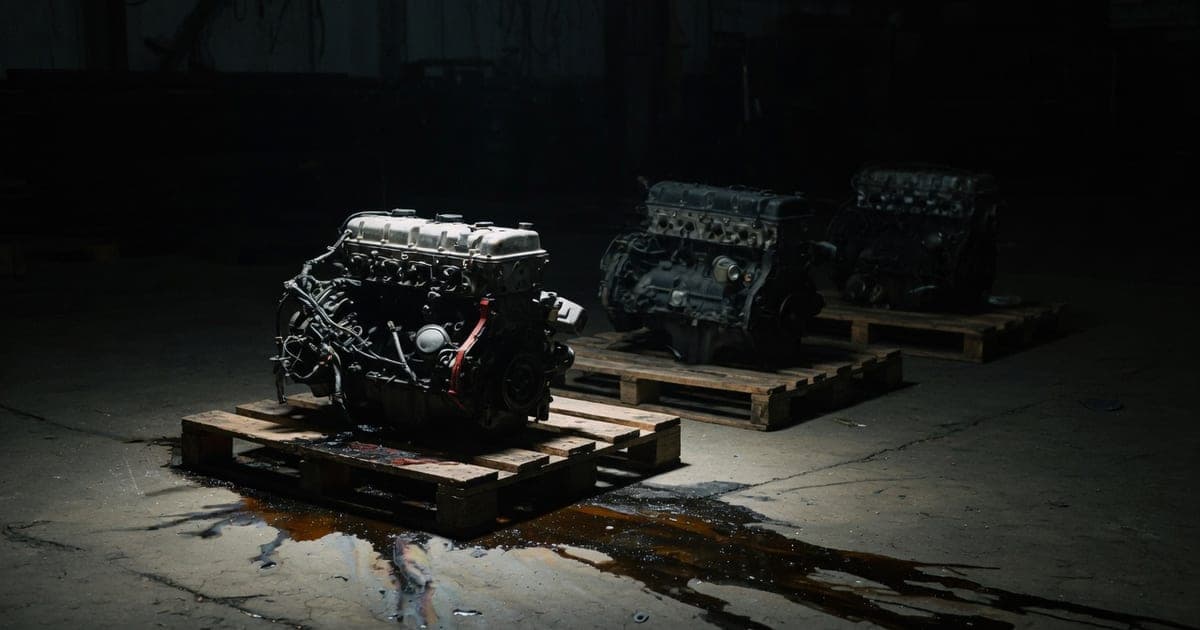
The honest answer up front: if your car already has one of these engines in it, keep it and spend the swap money on seat time, tyres and suspension. If you are choosing from scratch, the SR20DET is the lightest and cheapest to keep in an S-chassis, the RB25DET is the value pick for straight-six torque and sound, and the 1JZ-GTE is the strongest and smoothest but costs the most to get in the car. Which one is "best" depends entirely on your chassis, your power target and how much fabrication you are willing to pay for. Here is the full breakdown, Australian prices included.
The three engines at a glance
SR20DET: the S-chassis native
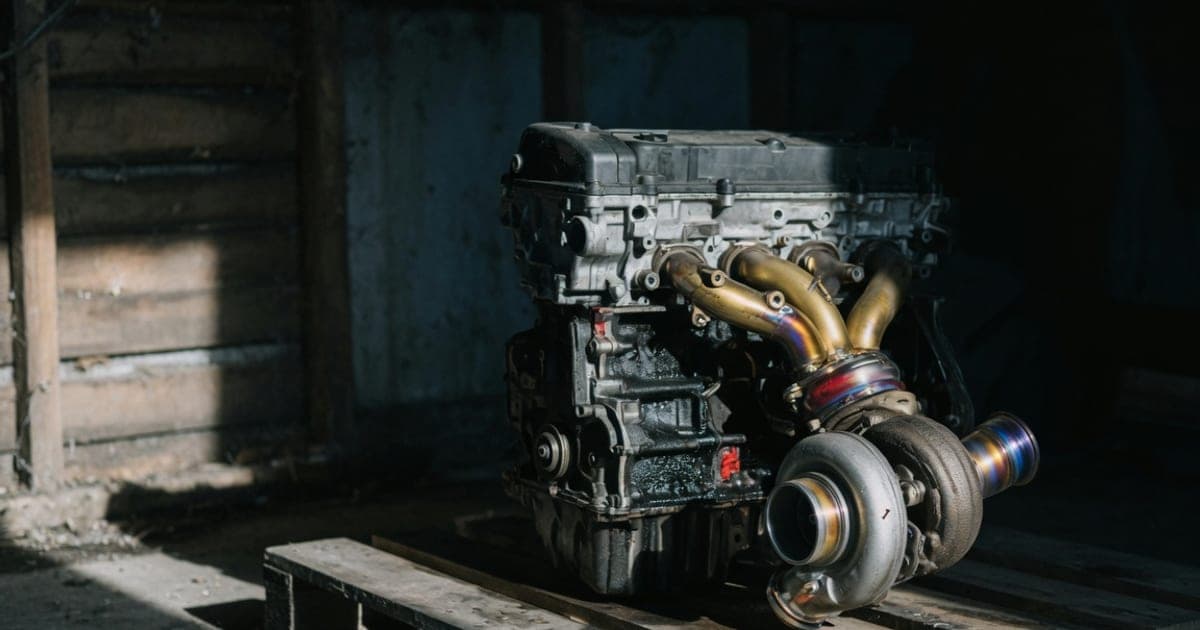
A 2.0 litre iron block four with an alloy head, factory turbo, and roughly 200hp stock depending on variant. It is the lightest of the three by a clear margin, which matters more in a drift car than forum arguments admit: less weight over the front axle means a car that transitions faster and eats front tyres slower. Parts availability in Australia is excellent because the SR has been the default S-chassis engine for thirty years. Every gasket, sensor, turbo flange and aftermarket manifold is a stocked item.
Weak points: ringlands let go when detonation shows up, rocker arms get spat at high rpm without stoppers or better valvetrain control, and a stock bottom end is realistically a 220-250kW engine before you are on borrowed time. Beyond that you are building it, and a built SR costs the same as a built anything.
Typical Australian price for a complete engine with loom and ECU: around $3,500-$7,000 depending on variant and condition. See the full variant-by-variant breakdown in the SR20DET buyer's guide.
RB25DET: the torquey six
Nissan's 2.5 litre straight six from the R33 Skyline (and in NEO form, the R34). Around 250hp stock, with a fat midrange the SR cannot match and a sound that settles the argument for a lot of people on the spot. The RB25 is physically longer and heavier than the SR, and all that mass sits over and behind the front axle when swapped into an S-chassis, so the car picks up a lazier, more momentum-driven character. Plenty of very good drift cars are built exactly this way on purpose.
Strengths: cheap to buy because Australia is swimming in R33 parts, strong stock turbo response, and a stock-bottom-end ceiling comfortably higher than the SR's for similar money. The NEO version out of the R34 is the better engine (solid lifters, improved head) and worth the premium if you find one.
Weak points: the standard ceramic-wheel turbo lets go if you lean on boost, oil control needs attention at sustained high rpm (a common theme for all RBs), and coil packs fail with age. None of this is expensive to address.
Typical Australian price: complete RB25DET around $2,500-$5,000, with NEOs at the top end and beyond. It is usually the cheapest path to a turbo six in this country.
1JZ-GTE: the Toyota answer
Toyota's 2.5 litre straight six, either twin turbo (earlier, non-VVTi) or the later single turbo VVTi version out of JZX100 Chasers, Soarers and friends. Around 280hp stock, famously overbuilt bottom end, and the VVTi single-turbo version in particular makes strong, lazy power with almost no drama. If your car is a JZX or a Toyota of any kind, this is not a debate: run the JZ. The Chaser it usually comes out of has its own parts picture worth reading before you buy the whole car to get the engine.
Strengths: the strongest stock bottom end of the three, genuinely happy at 300kW-plus on stock internals with proper tuning, smooth power delivery that is easy to drive on the limiter mid-drift, and the R154 or aftermarket box options behind it are well proven.
Weak points for a Nissan swap: it costs real money to put a 1JZ where an SR or RB used to live. Mounts, sump clearance, driveshaft, wiring and cooling all need solving, and while off-the-shelf S-chassis swap parts exist, you are typically $2,000-$4,000 deeper in swap hardware and fabrication before the engine makes a single kilowatt. VVTi engines also want a proper ECU rather than a piggyback, so budget for standalone management.
Typical Australian price: complete 1JZ-GTE around $3,500-$6,500, with tidy VVTi front-clip-sourced setups above that. Good manual gearboxes add four figures.
Weight and balance: the part everyone skips
Approximate dressed weights put the SR20DET well over 50kg lighter than either six. In a 1,200kg drift car that difference is not academic: it changes steering feel, how hard the car loads the front tyres in transitions, and how much spring you end up running. Four-cylinder S-chassis cars feel pointy and eager; six-cylinder swaps feel planted and torquey. Neither is wrong. Watch a local practice day and you will see both styles working. But pick the character you want deliberately instead of discovering it after the swap.
Parts availability in Australia
- SR20: best of the three for drift-specific support. Every manifold, mount and upgrade path is local and cheap.
- RB25: enormous supply of engines and stock parts thanks to three decades of Skyline imports, and healthy aftermarket coverage. Skyline-specific bits are covered in our R32 vs R33 vs R34 parts guide.
- 1JZ: engines are plentiful, swap hardware is more specialised and mostly imported, and JZX chassis parts are their own hunt. Soarers, where most cheap 1JZs land, are the donor worth watching.
Running costs and the stuff behind the engine
The engine is half the bill. Whatever you choose, price the gearbox, clutch, tailshaft and cooling at the same time. It is also worth knowing what the box behind each engine actually does to your gearing before you buy: the SR five speed and the R154 land within a few km/h of each other in second on the same final drive, which is computed gear by gear in choosing a final drive ratio for drifting. SR boxes are cheap but fragile at power; RB25 boxes are decent and plentiful; the R154 behind a 1JZ is strong but not cheap secondhand. A tired box discovered after the swap is the classic budget killer, so when you are looking at engines for sale, complete engine-and-box packages with the loom, ECU, and accessories are almost always better buying than a bare long motor plus a scavenger hunt. Driveline odds and ends turn up in the same feed.
Compliance, briefly
General information, not legal advice: any of these swaps into a car that did not come with that engine requires engineering approval in every state (VSCCS in NSW, VASS in VIC, QLD mod plates, and equivalents elsewhere), and emissions requirements follow your car's build date. A same-family swap (SR into an S13, RB25 into an R33) is far simpler than crossing brands. If the car is a dedicated track car that will never see rego, none of this applies, but be honest with yourself about that before you skip the engineering budget, because "track only" cars have a habit of becoming road cars. None of it changes if you bring the engine in yourself, and importing it as a half cut carries its own rules on top.
So which one?
- Budget S-chassis, first proper build, sub-250kW target: SR20. Cheapest to run, lightest, everything is available.
- Want a six, want torque, want value: RB25. The dollars-per-newton-metre champion in Australia.
- Toyota chassis, or chasing 300kW-plus with stock-internals reliability: 1JZ, and accept the swap bill if it is going into a Nissan.
- Falcon already in the shed, or no appetite for importing anything: the Barra, if you would rather stay Australian.
- Already have any of them running: keep it, buy tyres.
- Still deciding which chassis it goes into: the chassis reference table lists stud pattern, layout and rear diff family for every car on this site, so you can see what the swap drags along with it.
One deliberate omission: the rotary option this list leaves out is a different kind of ownership rather than a different power figure, which is why it is not on the shortlist above.
Find your engine
Compare real asking prices side by side in the current listings, where SRs, RBs and JZs sit in the same feed with photos and locations. If you have gone a different direction and one of these is sitting on a stand in your shed, list it free: complete, honestly described engines with compression numbers are exactly what the next builder is searching for.