Barra Swap Parts Guide Australia: What a Conversion Really Needs and What It Costs
9 min read
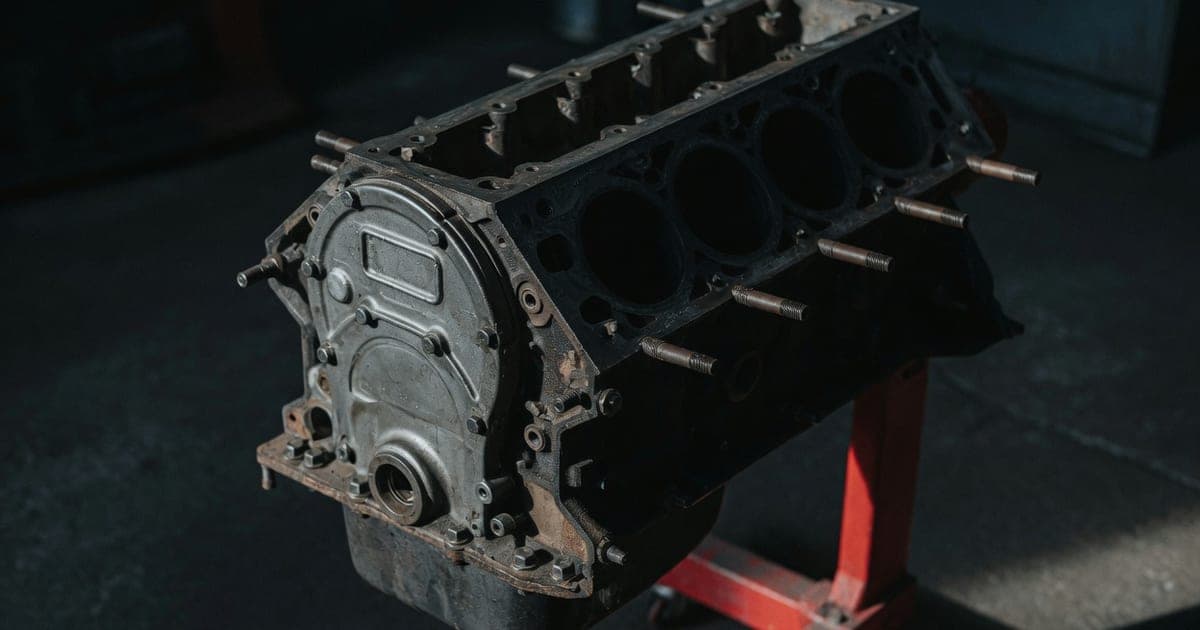
Short version: the engine is the cheap part. Complete secondhand Barras turn up between roughly $400 and $1,550 depending on how much is still bolted to them, and a whole running package with gearbox, loom and ancillaries starts around $2,500, which is remarkable value for an engine that takes roughly 350kW at the wheels on stock turbo rods. Everything after that is where the money goes: mounts, the clearance fight in a narrow engine bay, wiring and ECU, a custom tailshaft, fuel system and cooling. Two independently documented Australian builds put a competent do-it-yourself naturally aspirated or mild-boost swap between about $5,000 and $10,000, and a proper turbo build at $15,000 to $20,000 doing your own labour. Here is the parts list that fills the gap between the engine price and the real price.
Which Barra you are actually buying
The Barra is Ford Australia's 4.0 litre DOHC inline six from the BA through FG X Falcons and the Territory, and the variant changes the whole parts list. Naturally aspirated engines out of a base XR6, Futura or Fairmont are the cheapest and most plentiful donors. Turbo engines out of the XR6 Turbo and the FPV F6 arrive with the factory turbo and plumbing already sorted, which is exactly why everyone wants one and why they cost more. Territory donors are the same family but worth checking for accessory drive and ancillary differences before you assume Falcon parity.
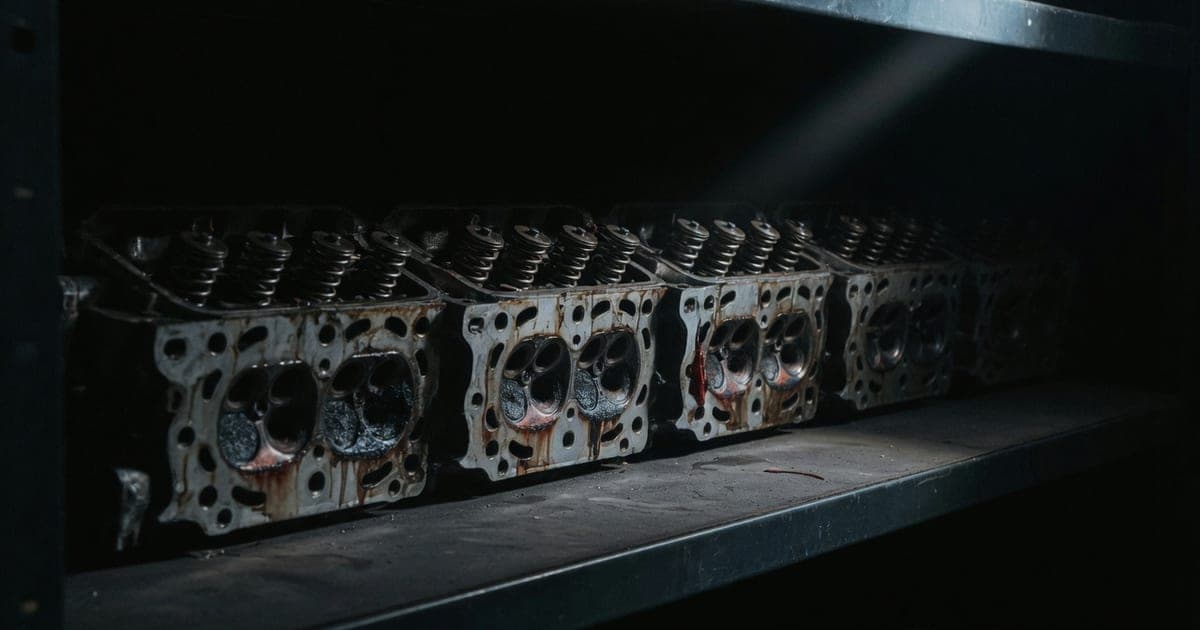
The most useful single fact for swap planning is the sump. BA and BF engines use a front-hump sump, FG onward uses a rear-hump pan, and which one clears your crossmember decides whether the engine drops in or whether you are buying a sump and pickup you did not budget for. Work out which hump your chassis wants before you buy the engine, not after it is hanging off the hoist. For rear-wheel-drive swaps generally, the FG rear-hump arrangement is the one people prefer.
Getting it to physically fit
The Barra is a long, tall inline six. That is the whole engineering problem in one sentence, and it is why the swap is easy in some chassis and a fabrication project in others.
Mounts. You do not have to fabricate, which surprises people. RB Factory sells laser-cut plate mount kits for Nissan chassis, covering R31 through R34 Skylines and S13 through S15 Silvias, engine brackets typically $155-$230, gearbox brackets $95-$160, crossmember spacers $95-$120. Tuff Mounts covers Barra into VB-VS Commodore K-frames, and KE Conversions covers the Lexus IS200 and IS300. A proven kit is the cheapest decision in the project once you cost your own time against a home-made mount that cracks.
Clearance. Firewall interference, steering shaft fouling and sump-to-crossmember clearance are the recurring complaints, real enough that suppliers design around them: sway bars get reshaped to route around the sump, and narrow early Falcon bays are flagged as needing extra work. Nobody publishes hard clearance dimensions per chassis, so this is the part you measure yourself with the engine on a hoist and a tape in hand.
Exhaust. 6Boost is the Australian-made, hand-built manifold everyone ends up on for tight bays, with high-mount T3 and T4 options that get the turbo up and out of the way.
Tailshaft. Custom, always, regardless of chassis and gearbox. Budget it as its own line item rather than hoping something bolts up.
Wiring and ECU: two honest roads
This is where swaps stall in someone's shed for eighteen months.
Keep and reflash the factory Ford PCM. Cheaper, keeps factory driveability, and entirely workable once the immobiliser is dealt with and the limp modes that expect a whole Falcon body are removed. A documented Australian build had this done for about $1,500 including the harness work. This is the right road for a stock or mild-boost engine.
Go standalone. Haltech makes a Barra-specific plug-in ECU with terminated harness kits, a full package with wideband running around $4,100. Serious money against a $1,000 engine, and the right money for real boost, proper logging or tuning flexibility on a track car. Standalone is effectively required to keep a factory automatic working, and tends to be the more common choice for non-Ford chassis, since there is no donor body loom, cluster or security system to lean on.
The trap either way is integration into a body with its own wiring, cluster and immobiliser. It is the most commonly outsourced part of the whole swap, so budget for a specialist even if you are doing all the mechanical work yourself.
Fuel, cooling and the rest
The factory fuel system is under-fuelled past standard boost, and this is consistently the most underestimated line item on the list. The common path is larger injectors in the 1000cc to 1650cc range, a high-flow pump and a surge tank, specified properly rather than approximated, because fuel starvation at load is an expensive lesson.
On the cold side, Process West makes Australian-made mandrel-bent hot-side intercooler piping for the BA, BF and FG platform, which saves fabrication if your swap keeps roughly factory turbo positioning. Radiator and intercooler placement in a chassis that never saw a turbo six is chassis-specific fabrication with no off-the-shelf answer.
The ancillaries people forget
The list that turns a "nearly finished" swap into three more weekends:
- Crank angle sensor. A well-known factory failure point that causes stalling. Fit a good one while the engine is out.
- Drive-by-wire pedal. The pedal must match whatever controls the throttle body. Mismatched pairings give genuinely dangerous calibration, with half pedal travel producing full throttle. RB Factory sells an FG-pedal-to-Silvia or Skyline adapter around $75; otherwise a standalone ECU calibrated to your pairing.
- Power steering pump versus alternator. A common clash. Castlemaine Rod Shop sells a high-mount alternator and power steering relocation kit for the BA, BF and FG Barra to solve it.
- Turbo oil feed and coolant lines. These clog with age; replace the oil feed before the engine goes in, not after it kills a turbo.
- Cluster and gauge signals. Your donor tacho and speedo need signals a non-Ford cluster will not give them for free, so budget standalone gauges or a CAN dash.
- Clutch and flywheel matched to your power target, plus coolant and harness routing, because Falcon looms are cut to Falcon distances.
None of these is hard. All of them are a Saturday, and there are about eight of them.
Where the donors come from
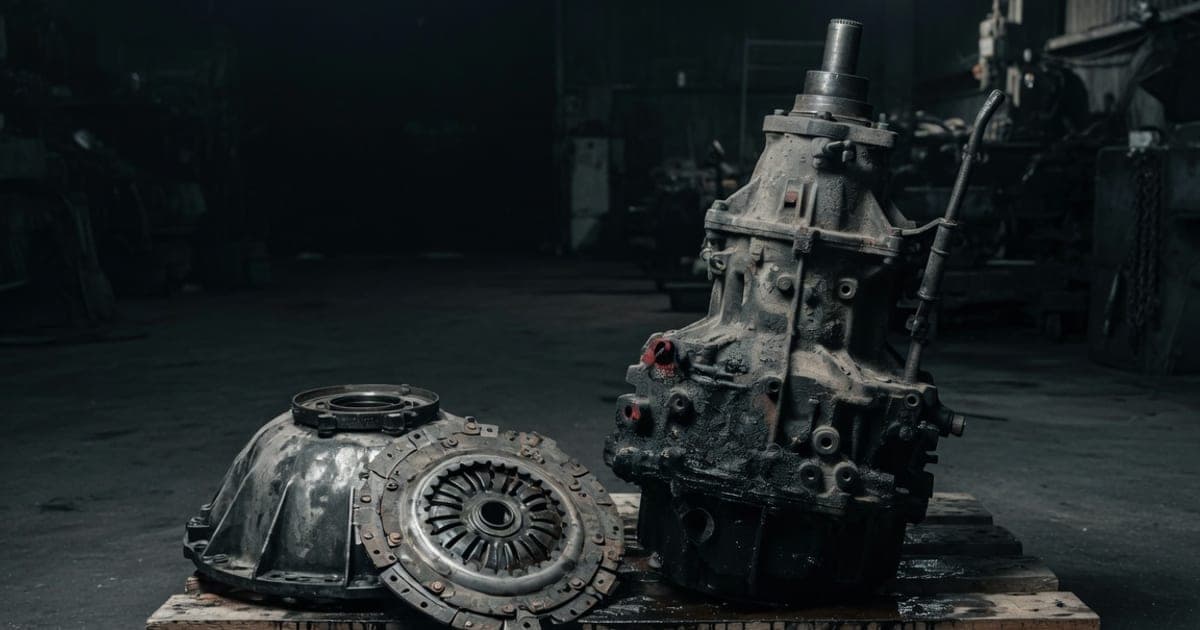
Live classifieds give a clear picture: complete engines with loom turn up around $1,100, high-kilometre BF engines as low as $500, and long motors with the ECU, loom, pedal box, alternator and power steering pump around $400. Engine-only pricing broadly spans $400 to $1,550 depending on completeness and condition. A complete running package with the gearbox, wiring and ancillaries realistically starts around $2,500, confirmed by a documented 103,000km engine and transmission package that sold for exactly that from a South Australian Falcon wrecker.
Three pools worth knowing:
- Falcon-specialist wreckers. Adelaide's southern suburbs are a genuine cluster for Falcon wrecking, and at least one yard there offers Barra turbo conversions and auto to manual conversions in house with factory Ford diagnostic programming. A yard that knows the engine tells you which sump you are getting, which a general wrecker will not.
- General marketplaces and Facebook groups. Constant real listings and dedicated Barra buy and sell groups, at the cost of doing all your own verification.
- Private sellers parting out a build. Often the best value and always the highest variance.
Whichever pool, an engine bought sight unseen is a core until proven otherwise. The verification routine in buying used parts without getting scammed applies word for word: dated photos, a video call, and either a compression test or a price that reflects not having one.
What it actually costs
Two independently documented Australian builds land in the same territory. One breakdown's main line items run roughly $2,000 for a used BA engine, $500 for mounts, $1,000 for wiring, $2,000 across exhaust, fuel, airbox and gaskets and $2,500 for gearbox adaptation, landing near $10,000 once consumables are added for a DIY naturally aspirated swap, roughly $20,000 professionally built. A separate 2025 build, a turbo Barra into a VS Commodore ute at 16-18psi, listed engine and transmission $2,500, mount kit $720, wiring with a factory ECU reflash $1,500 and fuel pump and surge tank $254, and came to $8,904 before tuning once the odds and ends were counted. A leaner, forum-sourced build came in lower again, around $5,000-$5,500.
Note what those lists have in common: the named big-ticket items are only about half to four fifths of the final number. The rest is hoses, brackets, fasteners, fluids and the third trip to the parts store. Whatever you total up, the honest planning number is higher.
Put together: a competent DIY running Barra swap realistically costs $5,000-$10,000, and a proper turbo build with fabrication and tuning runs $15,000-$20,000 on your own labour. Figures above that are thinly sourced, so treat any quote as being about your specific car, not a market rate. For how that compares against buying a car with the engine already in it, see what a drift build really costs and best first drift cars in Australia: a running XR6 Turbo often costs less than putting one into something else.
If the Barra is already in a Falcon and the goal is three pedals rather than a new chassis, that is a different project with its own parts list and its own costs, covered in the BA, BF and FG Falcon manual conversion guide.
What the reputation is actually built on
The Barra's standing rests on a genuinely tough bottom end: factory examples routinely pass 250,000 to 300,000km, thanks to thick cylinder walls and a rigid crank tunnel. As best the community agrees on limits: naturally aspirated rods are reliable to roughly 250kW at the wheels, and stock turbo rods to roughly 350kW, with well-set-up long motors on billet oil pump gears and upgraded valve springs reported as high as 500kW. Treat that upper end as tune and fuel dependent, not a guarantee.
The factory cast oil pump gears are the known early failure under high rpm and boost, so billet gears are a near-universal upgrade while the engine is already out, because doing it later means taking it out again. Valve float and the factory turbo are usually the next ceiling, which is why so many builds end up on a bigger turbo hung off a 6Boost manifold. Behind the engine, the stock four-speed automatic is commonly cited as done around 270kW at the wheels, survivors past that down to luck rather than engineering.
The compliance side
General information only, not legal advice. An engine swap into a chassis that never came with that engine is a modification requiring engineering approval in every Australian state under whichever scheme applies where you live, and the engine generally has to meet the emissions standards applicable to the vehicle's build date. A Barra into a VL is a well-known swap, not an automatically approved one. Budget the engineer before you budget the turbo, confirm requirements in your state before anything gets cut, and understand that a swap done without approval limits the car to track use.
Find the parts
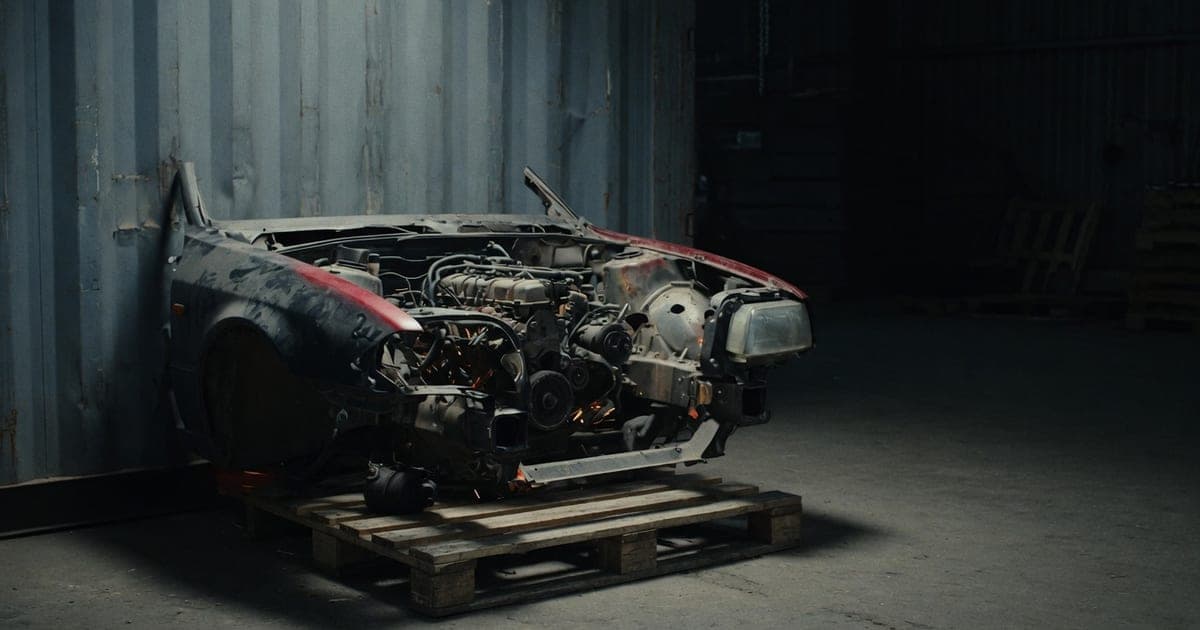
Have a look at the current listings for Barra long motors, complete engines with looms and turbo take-offs, and for the boxes, tailshafts and diffs that turn out to be the real cost of the project. Whole donor cars show up there too, and a cheap running XR6 is very often the smartest way to buy an engine, a loom, an ECU and every bracket you did not know you needed in one transaction. Stripped a Falcon and got a shed full of Barra ancillaries? List them free, because somebody out there is three parts away from finishing their swap.