BMW E36 Drift Build Guide Australia: The Diff, the Weak Points and What to Actually Pay
10 min read
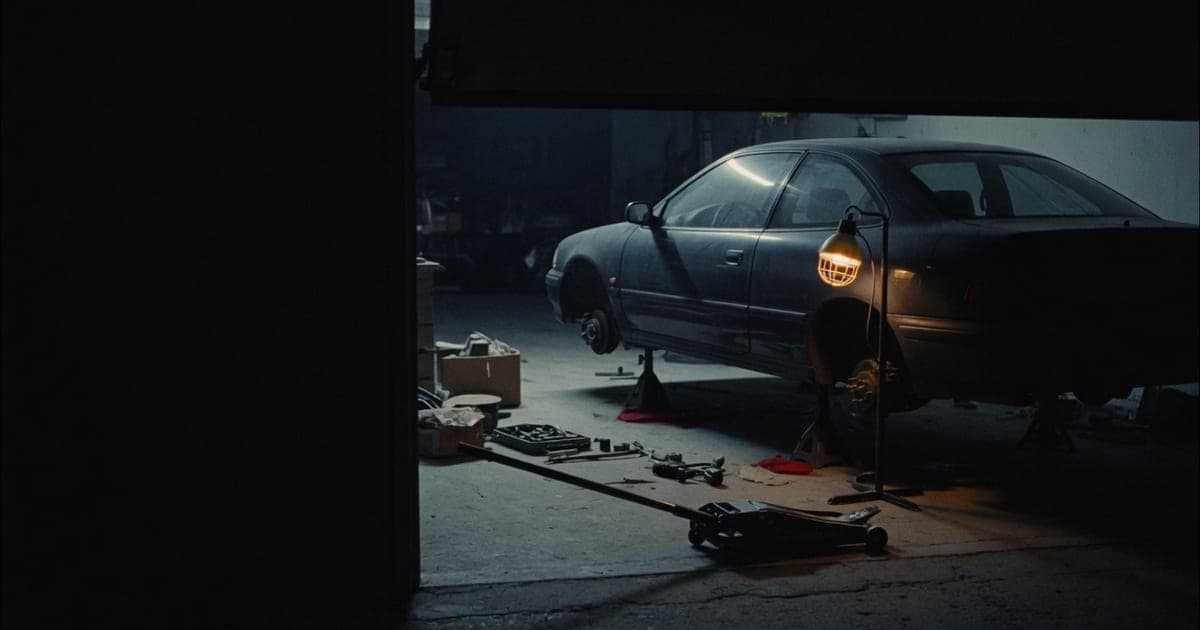
Short version: the E36 is now the default budget drift car in Australia, typically $4,000 to $12,000 for something already sorted enough to skid, and the one thing every buyer needs to understand before money changes hands is the diff. The 318i and 320i run a small 168mm case, the one BMW's own factory LSD option was only ever rated to about 150hp behind, and it folds up fast under drift use. The 323i, 325i and 328i run the tougher 188mm medium case. Go by the model, not the cylinder count: the 320i is a straight six and it still gets the small case, which is the single thing most buyers get wrong. Neither case comes with a proper limited-slip centre unless you land an M3 or a rare factory-LSD car, so almost every E36 diff you look at is an open centre wearing a stronger or weaker housing. Sort the diff, budget for the cooling system and the rear subframe mounts before they budget for you, and the E36 is genuinely hard to beat for the money. Here is exactly what to check, what it costs, and where the wear points are.
Why the E36 is Australia's default budget drift car
Ask around any grassroots practice day right now and you will find more E36s than almost anything else outside the odd Commodore or Falcon. S-chassis prices have climbed hard enough that a rough S13 now costs what a genuinely good E36 costs, and the E36 answers the same brief: rear-wheel drive, a manual box, a chassis that takes abuse, and a global drift scene that has already solved every setup problem you are about to have. Our guide to picking a first drift car puts the E36 in the same budget bracket as an MX-5 or a six-cylinder Commodore, cheap to buy, cheap to crash, with running gear a home mechanic can service in a driveway.
The bigger sixes are the ones people actually want. A 323i or 328i has enough torque to steer on throttle at low speed, which a 318i simply does not, and the extra weight over the nose gives the car a settled, predictable character once it is sliding. The 318i is not a bad drift car, it is just a pointier, twitchier kind of drift car, and along with the 320i it comes with the weaker diff, which is where this guide actually starts.
The diff question: 168mm small case vs 188mm medium case
BMW built the E36's rear differential in two case sizes, and which one is bolted under your car follows the model, not the number of cylinders. That distinction matters here because the usual shorthand, fours get the small case and sixes get the big one, is wrong on one car and it is a car people buy.
Which is which
The 168mm small case is fitted to the 318i and the 320i. The 320i is the one that catches buyers out: it is a straight six, an M50B20 or the later M52B20, and it still leaves the factory on the small case, so a seller quoting you cylinders is not telling you the case size. The small case is the physically smaller, lighter housing, and BMW's own rating for the factory clutch-type option on it tops out around 150hp, which tells you most of what you need to know about how it copes with a clutch-kicking drift car making more than that.
The 188mm medium case starts at the 323i and covers the 325i and 328i. It is closely related to the diff family used in the E30 325i and the bigger E34s, and even the later E46 shares enough of the same design lineage that retrofit kits exist to swap components between the two.
How to tell them apart
Do not take a seller's word for which case they are selling, because plenty of people genuinely do not know. The count to trust is on the side caps, the round covers on each side of the housing that the output flanges come through: four bolts a side is the 168mm small case, six a side is the 188mm medium case, and eight a side is the 210mm large case, which on an E36 means an M3 3.2. The rear cover backs it up, six bolts on the small case against eight on the medium, but count the side caps first. The seven-bolt rear cover you will find quoted online belongs to the much later Type 168 fitted to E90-era cars, not to anything that came out of an E36, and quoting it at the wrong car is how people talk themselves into the wrong housing. Ask for photos of both before you drive anywhere, and cross-check against the model the diff was pulled from.
Why the factory diff is considered weak
Two different problems get lumped together under "the E36 diff is weak," and a buyer needs to understand both.
The first is strength. Even the 188mm medium case was engineered around a road car's duty cycle, not repeated clutch kicks and shock-loaded lateral hits at a drift day. It holds up better than the small case, which is genuinely fragile once real power and abuse are involved, but neither one was built for what you are about to do to it.
The second problem is bigger and gets missed constantly: almost every non-M E36 left the factory with an open differential. A 328i getting the tougher medium-case housing does not mean it got a limited-slip centre inside it, and most did not. Genuine factory LSD on the E36 was effectively an M3-only feature, a two-plate clutch unit fitted as standard, with a handful of rare factory-option cars elsewhere in the range that you will not realistically find in Australian classifieds. So when a listing says "E36 diff for sale," the case size is only half the question: the other half is whether there is an actual locking centre inside it, and a seller who has not checked will often call it an LSD because it came out of a 328i, which proves nothing.
LSD retrofit options
Fixing the open-diff problem is a well-worn path in this chassis, and it comes down to three real options.
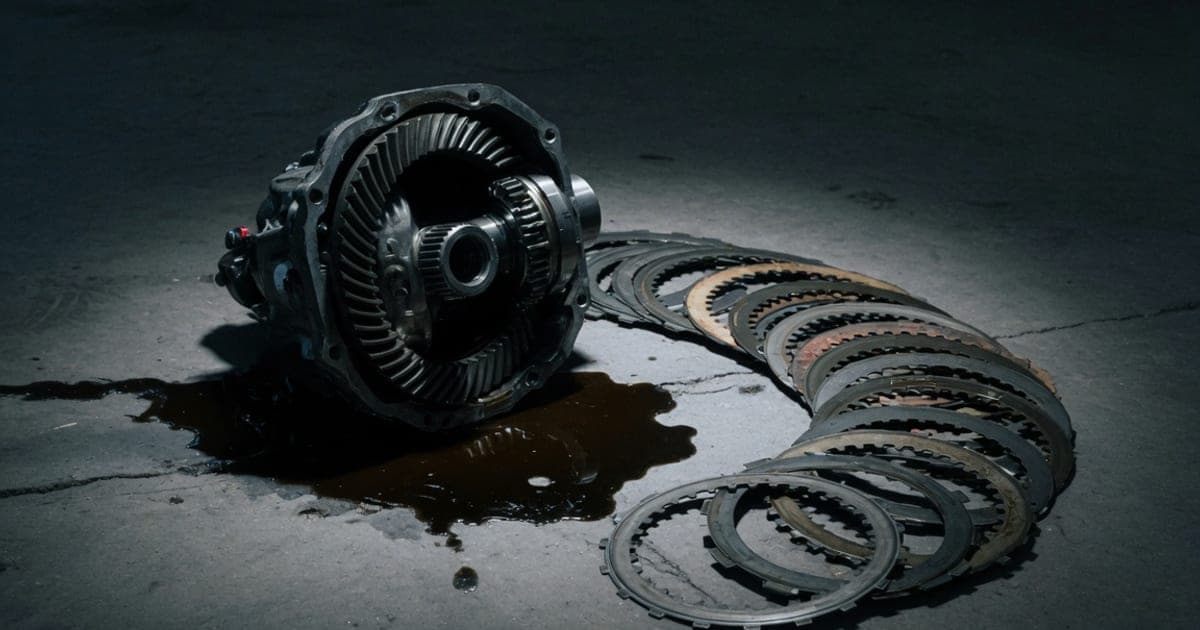
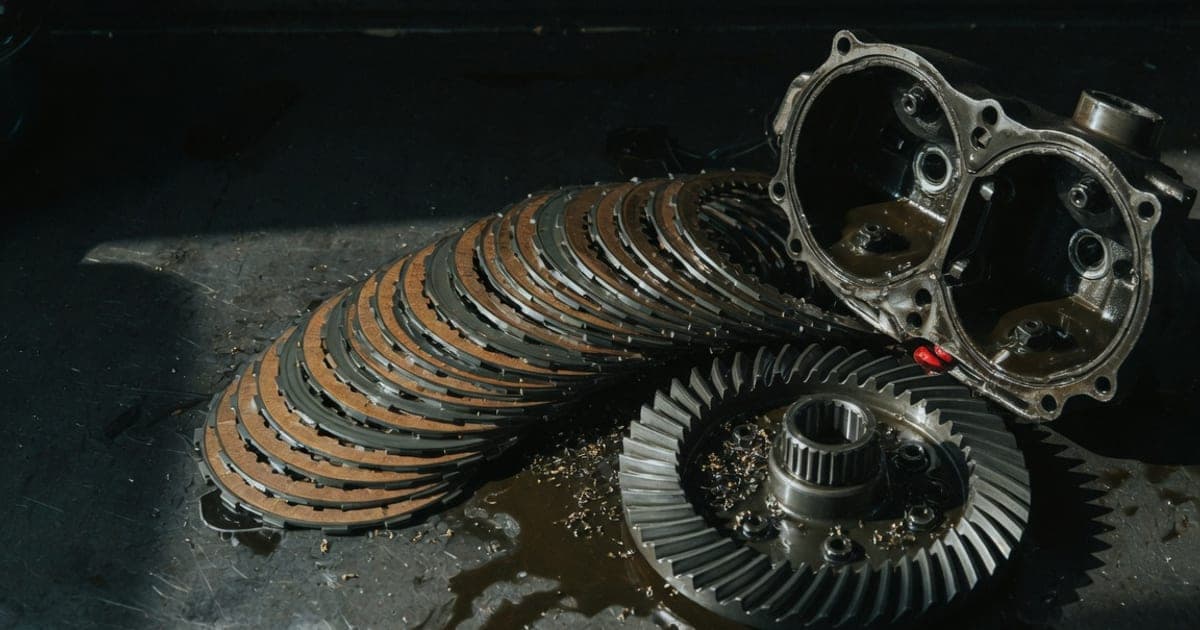
A clutch-type conversion kit is the most cost-effective fix for a housing you already own: these kits replace the internals of your open centre with a proper multi-plate clutch pack while reusing your existing crown wheel and pinion, so there is no ratio change to plan around. It is the same idea covered in more depth in our 1.5-way vs 2-way LSD guide, and the same logic applies here: a dedicated drift E36 wants the 2-way behaviour, a car that still does daily duty is better served by a 1.5-way.
A new aftermarket unit dropped into a medium-case housing is the other common route, and it is worth being deliberate about which type you buy. A helical, torque-biasing unit like a Wavetrac is a genuinely great road upgrade, but it is the wrong tool for drifting, for the same reason any helical diff is: with an unloaded inside rear wheel, which is most of what a drift car does, it has little to bias torque against. For a car built to slide, a proper clutch-type LSD, Kaaz and similar brands are well represented here, is the one to chase.
In Australia, Diff Lab is the largest dedicated retailer of BMW differential parts and stocks both paths, Neat Gearboxes distributes Wavetrac locally, and SW Motorsport carries Kaaz units. A used complete LSD diff, ideally pulled from an M3 or someone else's finished project, is usually the cheapest way into a proper locking centre once you account for the labour of building one from a bare housing and loose parts.
Whichever path, confirm the housing size, spline count and flange type before you buy anything, the same way you would for any secondhand diff: ask for real photos and part numbers, not just "it's an LSD, trust me."
What breaks: the known failure points
The E36's two famous weak points have nothing to do with the diff, and both are worth fixing before you ever turn a wheel sideways, not after.
Rear subframe mounts
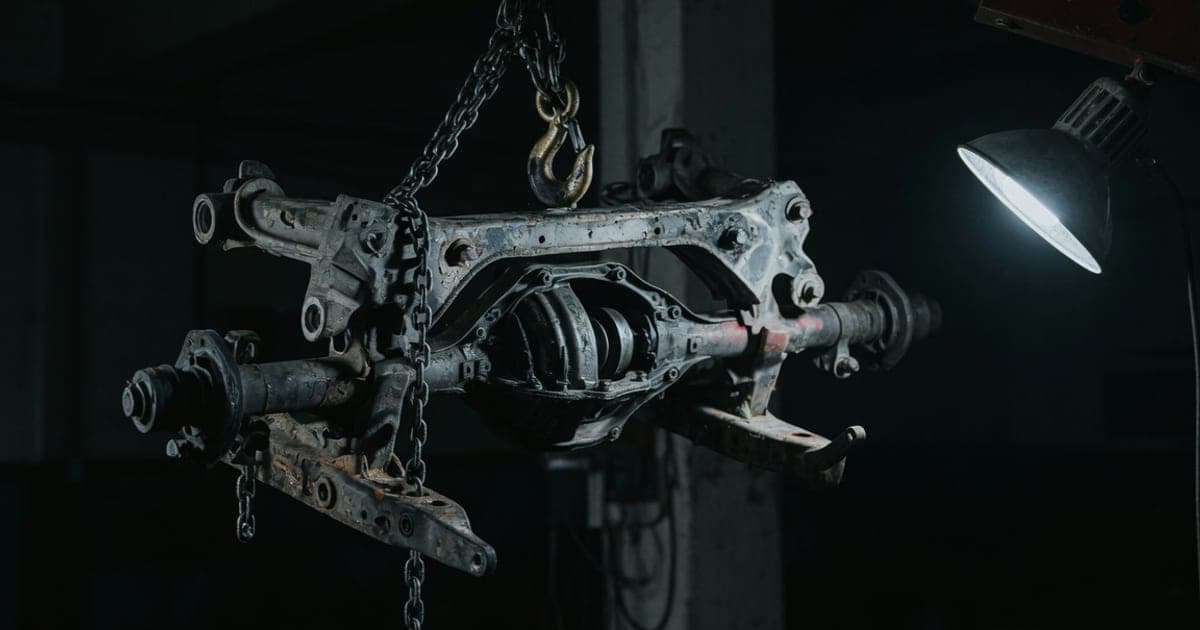
The rear subframe bolts to the body through sheet metal mounting points that were never designed for the shock loading a drift car delivers on every clutch kick and hard re-entry. Under sustained hard use, especially on a lowered, stiffer car, those points can crack and eventually tear out of the floor pan. It is known enough that Australian workshops sell bolt-in reinforcement plates for it: Hillside Motorsport has a laser-cut E36 kit for around $126, and KAZZ Engineering in Brisbane cuts an equivalent set from 3mm steel. Either is cheap insurance compared to a torn floor pan, and the sensible move is welding a set in before you build the rest of the car, not after.
The cooling system
BMW fitted the E36 with a plastic water pump impeller, a plastic thermostat housing and a plastic expansion tank, and thirty-plus years of heat cycling has made every one brittle. The classic failure is sudden: the impeller shatters inside the pump with no warning, coolant flow stops, and the head is cooked before the temp gauge has finished climbing. This is not a "might happen" problem on a car this age, it is closer to "when," and specialists like Run Auto Parts stock metal-impeller pumps and replacement housings specifically because so many E36 owners do this exact preventative swap. Replace the plastic componentry with metal or reinforced parts as day-one prep on any E36 headed for a drift day.
What E36s actually cost in Australia
Prices move around with condition and how much has already been spent, but the shape of the market right now:
- Rough, non-running or heavily cosmetically tired shells: typically $2,000-$4,000. Fine as a project if the subframe mounts and rust are honest, a gamble if they are not.
- Complete, driving 318i cars: typically $3,000-$6,000. Cheapest way into the chassis, weakest diff. A 320i badge buys you a six and the same small case.
- Complete, driving 323i, 325i and 328i cars: typically $4,000-$12,000, which lines up with what the wider first drift car market shows for this model. This is where most buyers land.
- Already drift-built cars with a cage, coilovers and a sorted diff: highly variable, roughly $10,000-$20,000+ depending on what has actually been spent and how well it was done.
- M3: a different car and a different budget. Factory LSD, the S50/S52 engine and strong collector interest have put it well outside "budget drift car" territory, so treat it as its own decision, not a step up from the cars above.
On the diff side specifically: a bare small-case open housing is close to throwaway money if nobody wants it, a bare medium-case housing is worth seeking out and holding onto, and a genuine used clutch-type LSD centre, especially one pulled from a wrecked M3, commands real money because every serious E36 builder in the country is chasing the same part.
Which E36 should you actually buy
If the budget is tight and you can live with less shove until the car is set up, a 318i or 320i gets you into the chassis and the LSD conversation cheapest, accepting that both start you on the weaker housing regardless of what is under the bonnet. If you can stretch to a 323i or better, do: the 188mm case, the extra torque and the better sound are worth the difference in asking price on their own. Coupe or sedan makes no mechanical difference, and coupes carry a cosmetic premium, so a straight sedan is the smarter buy for a car that is going to get built up and occasionally crashed. Manual only, obviously, and walk away from anything where the seller cannot tell you whether the diff is open or locked, because that single answer changes what you are actually buying. If you are not wedded to the E36 specifically, how the E30 and E46 compare is worth reading first.
If you are chasing more steering lock once the car is sorted, our angle kit guide covers what is genuinely worth fitting and when, and the honest answer for most first-year E36 owners is the same as it is for any other chassis: not yet. On wheels, the offset calculator puts 5x120 offsets drawn to scale next to the guard so you can see the shopping range before you commit.
Compliance, briefly
General information, not legal advice: subframe reinforcement and a diff swap within the same case family are generally treated as maintenance and repair rather than a certifiable modification, but coilovers, cages and anything touching steering geometry follow each state's modification scheme, the same as on any other drift build. Check your own state's current rules before assuming anything is a straightforward bolt-on for a registered car.
Where to find one
Browse the current listings for E36s that are already built or ready to build, and for diff housings and LSD centres specifically, since that is where sellers list case sizes and whether a centre is open or locked. Pulled a diff, subframe plates or a spare cooling system off a car that is no longer yours? List it free: E36 parts move fast right now, because half the drift grid in this country is currently building one.