Holden Commodore Drift Build Guide: Which Generation, What Breaks, and the Angle Problem
9 min read
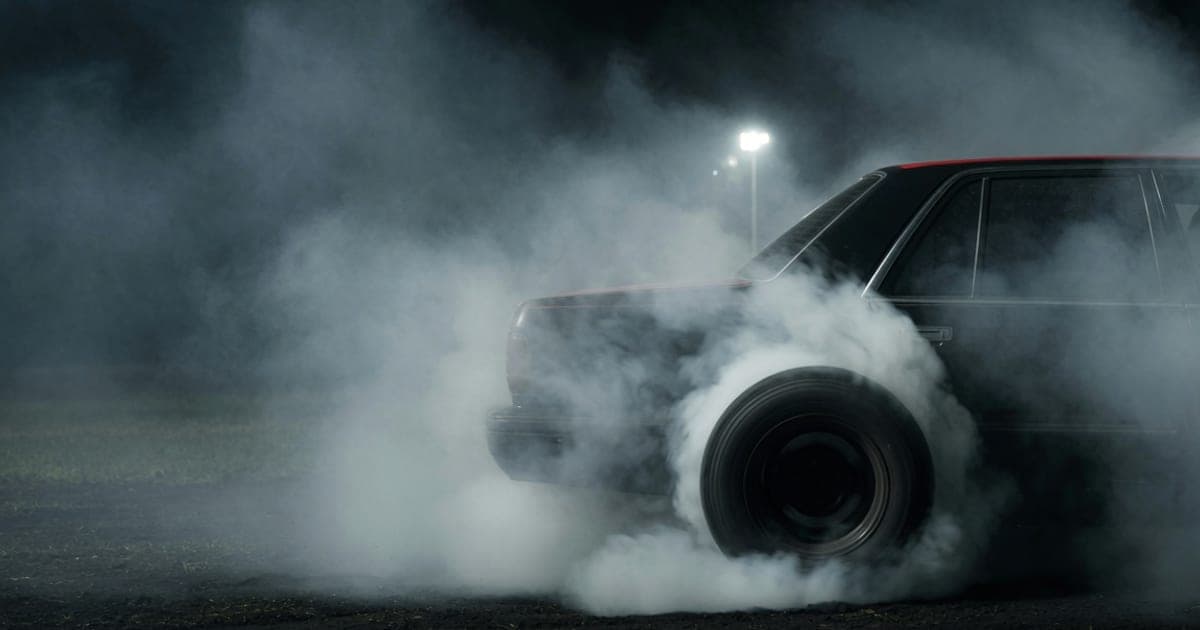
Short version: a VT to VZ Commodore is the sweet spot for a first Commodore drift build, because driving cars sit around $3,000 to $8,000, every wrecker in the country stocks them, and there is real off-the-shelf angle hardware for the platform. VN to VS cars are cheaper again and the base models give you a genuine live rear axle, at the cost of age and rust. VE and VF are better cars that cost real money. The one thing most Commodore drift guides get wrong is the live axle question: independent rear suspension became the standard fitment at the VT in 1997, not at the VE in 2006, so VT to VZ cars are IRS cars, and how you weld a diff, chase angle and fix what breaks all follows from that.
Live axle or IRS: get this right first
This decides your whole build, and it is the fact most consistently reported backwards.
- VN (1988 to 1991): live rear axle across the sedan range. IRS was not offered.
- VP through VS (1991 to 1997): trim-dependent, and this is the part that catches buyers out. IRS was standard on Calais and the V8 SS, and from the VR on the Acclaim as well, while Executive, S and Berlina came with the live axle and could be optioned to IRS. So a base VS is a live-axle car and a VR Calais is not. Check the individual car, never the badge on the boot.
- VT through VZ (1997 to 2006): semi-trailing-arm IRS standard across the sedan and wagon range, with the ute joining at the VU in 2000. The exceptions are the VY and VZ One Tonner and Crewman cab-chassis models, which kept a live axle for load rating.
- VE and VF (2006 to 2017): a new IRS design with the ZF diff covered in the VE and VF diff guide.
So a true live-axle Commodore means a VN, a base-spec VP to VS, or hunting a VY or VZ One Tonner or Crewman. That last option is genuinely underrated: live-axle simplicity in a much newer, straighter shell than a 1990s sedan, and because they were working vehicles rather than sports sedans, nobody has bid them into collector money.
Does it matter? Yes, and the honest scene position is that IRS is harder. As one long-running forum thread puts it, people have worked out how to make an IRS car hook up, but it is a lot more work than a live axle. The strongest evidence is commercial rather than anecdotal: both Showtime Customs and Fabrication and McDonald Bros Racing sell kits to convert IRS Commodores back to a live axle on a four-link with a Panhard bar and a nine-inch diff, and McDonald Bros pitch theirs squarely at owners who are tired of breaking the standard independent rear.
That said, plenty of people drift IRS Commodores without converting anything, and there are well-documented VE builds running Pedders coilovers with modified knuckles and caster arms on essentially standard rear architecture. IRS also offers camber adjustability a live axle cannot. The trade is a smaller aftermarket and more parts to break. For a first build, simple wins, which is the main argument for the older cars.
Why a Commodore is the cheap entry
The case is supply. Holden built these by the hundreds of thousands, so panels, glass, seats, brakes and driveline are cheap and everywhere. Crash a Silvia and you hunt for a part. Crash a VT and you choose between five. Roughly where the market sits at the time of writing, with the usual warning that classifieds move weekly:
- VN to VS: stripped rolling shells around $1,800 to $3,500, running and driving sedans and wagons commonly $2,000 to $8,000, priced on condition rather than spec.
- VT to VZ: driving sedans mostly $3,000 to $8,000, VZ utes around $2,500 to $8,000. Manual SS cars have left budget territory entirely and now ask $20,000 and up.
- VE and VF: the realistic cheap entry is a six-cylinder Omega around $6,000, or a repairable write-off in similar money. SS and HSV manuals run $24,000 to $90,000 and beyond, which is a different conversation.
The engine ladder helps too. Ecotec and Alloytec V6 cars are close to free, and for learning the V6 is genuinely enough: a heavy car with modest power and a locked rear teaches transitions beautifully because everything happens slowly enough to read. That matches the platform-by-platform view in best first drift cars in Australia, where the Commodore earns its spot on running costs rather than excitement. The Falcon equivalent runs the same argument from the Ford side, where the gearbox is what decides the price.
What breaks first
This is where a Commodore build actually costs money.
Diffs
Commodores mostly run BorgWarner rear ends, and there is a real generational split. The early 25-spline two-spider unit fitted up to most VLs is weak and, more importantly, has no stronger aftermarket gearset available, so there is no upgrade path once you break it. From VN onward the 28-spline four-spider unit is notably stronger, and drifters will recognise the family: it is closely related to the diff the Nissan R31 Skyline used. Either way the crownwheel and pinion is the BorgWarner's generic weak point. VE and VF run the completely different ZF unit.
IRS diff mount cracking
Every IRS Commodore up to VZ has a habit of cracking around the diff mounting bolts, and manual cars that see axle tramp are the worst offenders. The known fix is welding washers or plates around the holes to spread the load. Check for it before you buy, because a cracked mount makes noises people spend real money chasing inside the diff. On a car you are about to drift, do it preventively.
Control arm bushes
The factory front lower control arm bushes are a fluid-filled design that perishes with age, and when they go the camber and caster wander and the car feels vague on turn-in. This affects everything from VN to VF. Polyurethane replacements from Whiteline, Nolathane or SuperPro are the standard fix and one of the best value-per-dollar jobs on the car.
Tailshaft centre bearings
They wear under hard use and high kilometres, and an ignored one takes the universal joints and eventually the diff with it. Cheap to fix, expensive to ignore.
Gearbox and clutch
Synchros wear under abuse in both the V8 and V6 boxes. For a drift car the clutch is the bigger worry, because clutch kicking is the entire technique and the factory unit was not designed around it. Budget a decent clutch as part of the build rather than as a repair later.
Brakes
Stock Commodore brakes are marginal for repeated hard use. The well-trodden upgrade is retrofitting VE or VF Redline Brembo calipers and rotors onto a VT to VZ, which works but needs 18 inch or larger wheels to clear, so plan the wheel and brake purchases together.
The angle problem
Here is the honest position. There is no reliable published figure for a Commodore's factory steering lock, and no credible measurement comparing it against an S-chassis. Anyone quoting you precise degrees for a stock VT is guessing.
What is verifiable is that real Australian hardware exists, which also settles a claim you will see repeated: it is not true that nobody makes an off-the-shelf Commodore angle kit. Showtime Customs and Fabrication in Heathcote, Victoria sells drift knuckles for the VT to VZ platform and a tubular lock kit for the same cars at around $1,825. Their bigger kits advertise very large angle figures, so treat marketing angle claims as claims rather than measurements. On the older cars there is also a documented do-it-yourself route involving a manual rack swap plus cutting and re-welding the tie rod mounts, which is fabrication work rather than a bolt-on.
Structurally, Commodores use MacPherson struts like an S-chassis, which is favourable for angle, but the wider front track and bigger subframe mean equivalent angle asks more of the knuckle and your clearance planning. Test full lock in the pits both directions before you trust it. For the later cars, the offset calculator's VE and VF preset gives a rough sense of how much guard you actually have to work with before you plan any of it.
None of which you need in year one. The argument in do you need an angle kit holds for a Commodore exactly as it holds for a Silvia: sort the rear, get an alignment, get seat time, and buy lock when your driving genuinely runs out of it.
Rego versus track only
General information, not legal advice, and rules differ by state under the national modification framework.
The line most people cross first is the diff. A welded diff is consistently treated as not roadworthy anywhere in Australia, and it carries an insurance exposure on top of the roadworthy question. A mini-spool is the same exposure in a tidier package, because it locks the axle the same way. The moment you weld, you have chosen a track car and a trailer. Be sceptical of anyone telling you a welded diff rarely gets noticed: that is a statement about enforcement odds, not about legality, and it is not a bet worth making with your insurance.
Suspension is the next line. Commonly cited thresholds are around 100mm minimum ground clearance, with drops beyond roughly 50mm generally needing an engineer's certificate. Treat those as indicative and confirm for your state, because they vary and they change.
Cages are the third. In New South Wales the guidance is that a full cage generally cannot be street registered: the rear section can be welded in, padded and engineered, while the front must be bolt-in or removable, and the car re-registers as a two seater. Other states run their own approval schemes. Track requirements are separate and often more relaxed: some clubs want a competition-spec cage only for actual competition, not for skills days.
The practical version: a Commodore with an LSD, sensible coilovers, a good alignment and a proper seat can stay registered and drive itself to practice days. A Commodore with a welded diff and a lock kit is a track car. Decide which one you are building before you spend, because that single decision changes the diff, the steering and whether you need somewhere to park a trailer.
Parts brands that actually make Commodore gear
Worth knowing, because most drift catalogues skip this platform:
- Showtime Customs and Fabrication for VT to VZ drift knuckles, lock kits, shortened IRS kits and nine-inch four-link conversions.
- McDonald Bros Racing for live-axle four-link conversion kits covering VR to VS and VE to VF.
- Harrop for the VE and VF Truetrac centre and gear sets.
- MCA Suspension, whose Pro Drift range is drift-developed and listed for Commodore fitment, with genuine competition history behind it.
- Pedders eXtreme XA adjustable coilovers, covering VT to VZ and VE to VF, and the most commonly recommended option in Commodore threads.
- Whiteline, Nolathane and SuperPro for the bushes that fix the vague front end.
- King Springs for lowered springs, though a proper coilover's adjustability earns its keep on a drift build.
Where the money should go
Diff first, then tyres and seat time, then coilovers, then angle. The Commodore gets no exemption from the usual order, and the car itself is the cheapest part of the equation. The tier-by-tier numbers are in what a drift build really costs in Australia, where a Commodore sits comfortably in the budget tier.
Go and find one
Have a look at what is listed right now for running Commodores and half-built projects, which are frequently the best value in the market because nobody recovers their labour, and for the diffs, LSD centres, boxes, knuckles, lock kits and coilovers coming off other people's builds. When your build moves on or the shell finally gives up, list the parts free, because there is a queue of people building exactly what you just took apart.