Rolling Shells for Sale in Australia: What You Actually Get, What They Cost, and When to Walk
9 min read
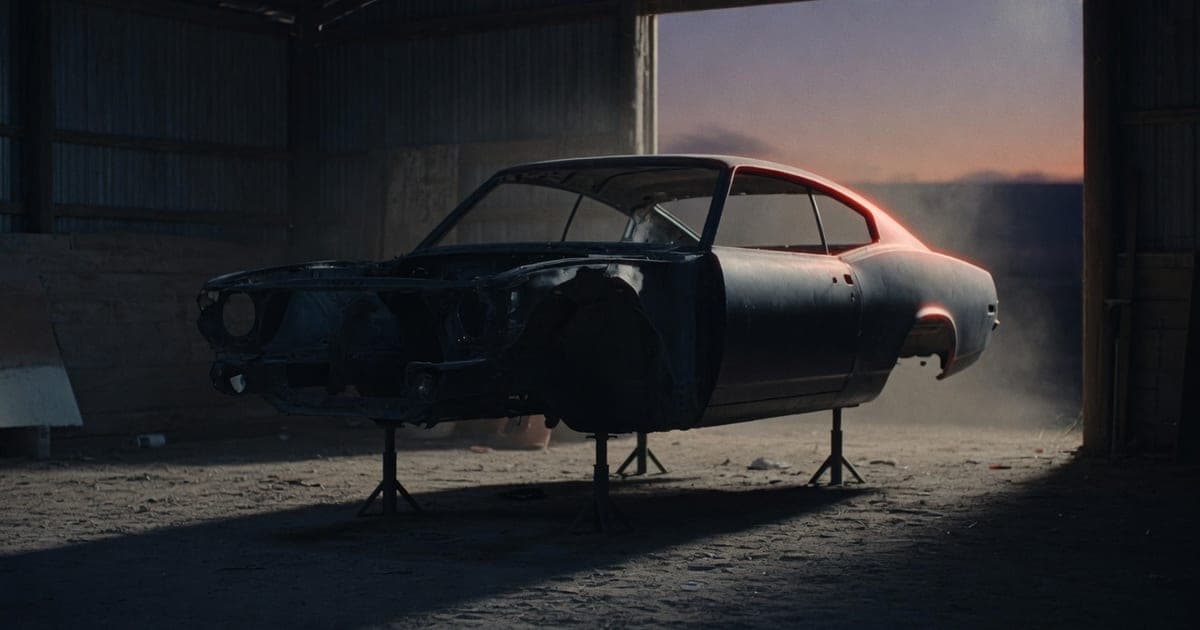
Short version: a rolling shell is a body still sitting on its own hubs, suspension and brakes, with the engine and gearbox gone, so it can be pushed, winched and trailered without a forklift. In Australia they change hands from around $1,000 for a stripped S13 up past $5,000 for a complete 180SX shell that still has its doors, glass and interior. What separates a shell worth buying from a money pit is the metal, not the asking price, and thirty minutes with a torch and a screwdriver tells you which one you are looking at. The single most expensive mistake is buying a cheap shell with bent rails, because straightening a chassis costs more than every good shell you passed on.
One search tip before anything else. Do not search "project shell" in Australia unless you want news about the petrol company selling gas fields. The term the scene actually transacts in is rolling shell, with "bare shell", "stripped shell" and "parts car" as the neighbouring listings. Search those words and the real cars appear.
Rolling shell vs bare shell vs parts car
These three terms describe a gradient, and sellers use them loosely enough that you must ask what is actually included rather than trust the heading. One established dismantler currently lists an R32 as a "bare rolling shell" and a 180SX as a "bare shell" on the same site, which tells you how firm the vocabulary is.
Rolling shell
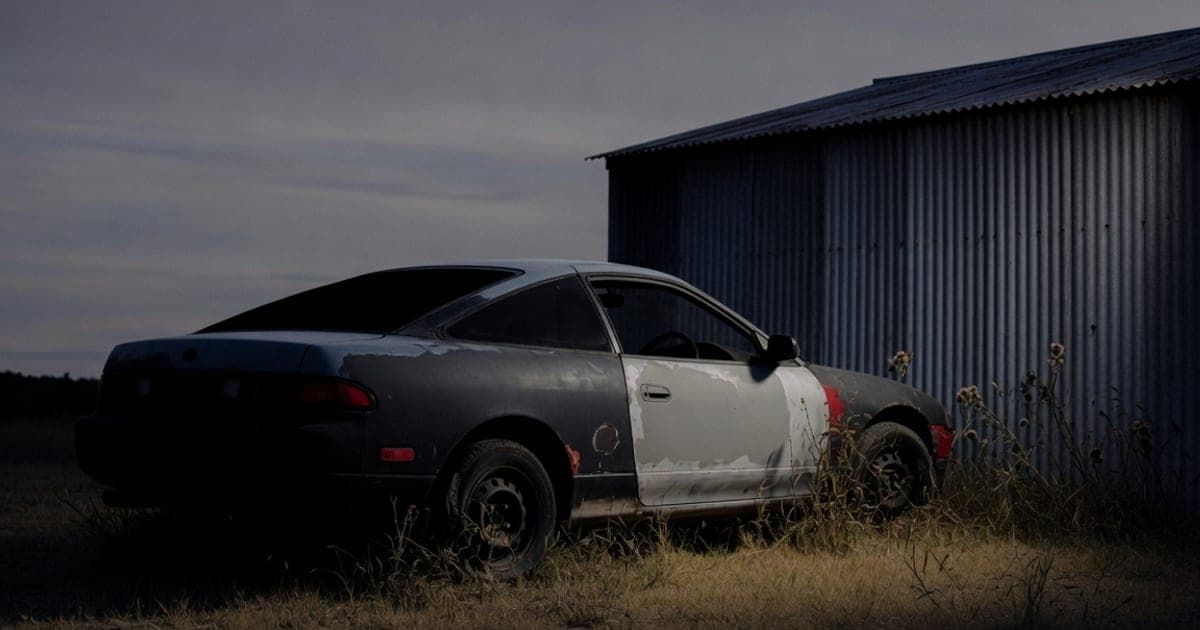
The body is on its wheels or at least its hubs, with suspension, uprights and usually brakes attached. Engine and gearbox are normally gone. Everything else is a coin flip: doors, glass, dash, wiring loom, seats and subframes may all be there, or the car may be a hollow tube with corners. A 180SX roller advertised recently in Victoria still had its SR20 loom, manual pedal box and factory sunroof. Another at a fifth of the price was a body and four corners. Both were honestly described as rolling shells.
The practical meaning of "rolling" is logistical. It goes up a set of ramps or onto a tilt tray under its own roll. A shell on stands needs a forklift at both ends of the journey, and that changes your transport cost more than most buyers expect.
Bare shell or stripped shell
No running gear at all, sometimes no hubs, often on a pallet or stands. This is the starting point for a full build where you were replacing the suspension, brakes and subframes anyway, and it is the right buy if you have a cage builder and a plan. It is the wrong buy if you are trying to get a car onto a skid pan cheaply, because you are then buying a whole car's worth of running gear separately at retail.
Expect a bare shell to sit below a roller of the same car, though the gap is not fixed: a straight, clean bare shell beats a rusty roller every time, because the market prices condition ahead of completeness.
Parts car
A parts car still has harvestable components and is often running, or was recently. You buy it to break it up. That is the cleanest distinction in the whole conversation: a parts car is bought to be stripped, a shell is bought to be built. When a wrecker finishes with a parts car, what remains is a shell.
Worth knowing: a rough but complete parts car is frequently better value than a shell, because you sell the engine, loom, seats, wheels and good panels to recover most of the purchase price and keep the body. That only works if you have storage and the patience to list them. If both are true, price parts cars against shells before you commit, and read whether to part it out or sell it whole from the seller's side, because that is the same sum run backwards.
What rolling shells actually cost in Australia
These are recent Australian asking prices from live and near-current listings, not an aggregated market survey, so treat them as the shape of the market rather than a price guide. Shells are priced by condition and completeness, and two cars with the same chassis code can legitimately sit at either end of these ranges.
- S13 Silvia rolling shell: seen advertised as low as around $1,000 firm for a stripped example.
- 180SX rolling shell: a genuinely complete one, SR20 manual with loom and sunroof, was up around $5,000. Completeness is doing all the work in that number.
- R32 Skyline GTST rolling shell: roughly $1,650 through a dismantler up to about $2,000 negotiable privately.
- Toyota 86 and Subaru BRZ shells: the newest budget shells to enter the pool, roughly $2,000 to $8,000 depending on how much is left attached.
Two market realities worth stating plainly. First, S-chassis shells are the only ones with genuinely deep supply, and even those are thinning as complete-car values pull everything back into whole cars. Second, if you are hunting an AE86 shell in Australia, they effectively do not exist at any sane price. Complete cars start in the tens of thousands and climb, and the only "shells" that surface in searches are offshore reproduction bodies. Do not build an AE86 budget around finding a cheap local shell, because you will wait years.
Cross-check any quote against what whole cars are doing. Browse the live listings before you buy a shell: when a running, driving car of the same chassis is only two or three thousand more, the shell is bad value and the seller is dreaming. A running car at the same money is the comparison to make before you commit to a project. That happens more often than you would think, and it is why the advice in best first drift cars you can actually buy in Australia starts with buying something that already drives.
The metal is the entire purchase
You are not buying a car. You are buying a stamped steel structure, and everything else bolts to it. Every mechanical part on a shell can be replaced with money. The structure cannot, not for sensible money, and a professional chassis pull on a bent car will cost more than the shell did.
The rust list, in the order that matters
Take a torch, a magnet and a screwdriver, and go through these in this order:
- Chassis rails, particularly where they kick down to meet the floor. Structural. Rust or ripple here ends the inspection.
- Strut towers, front and rear. Thin overlapping panels that trap moisture, and a known failure point. Look for cracks radiating from the top mount and seam sealer that has split or been freshly smeared on.
- Sills, inner and outer. Probe them. A screwdriver sinking into what looked like paint is the classic result.
- Floor pans. Lift the carpet or underlay if any is left. Look at the metal, not the covering.
- Boot floor and spare wheel well. Water gets past taillight and hatch seals on almost every one of these cars and sits there for a decade.
- Rear subframe mounting points. Tears, elongated bolt holes and cracking around the mounts. On a drifted car this area has taken abuse the factory never planned for.
- Front crossmember and wheel arches. Cheaper to fix, but they tell you how the car lived.
Surface rust is a negotiation. Structural rust in rails, towers or subframe mounts is a walk-away, and no amount of "it just needs a patch" changes the metallurgy. The chassis-specific rust maps in the S-chassis buyer's guide are worth reading before you inspect a Silvia or 180SX, because each generation has its own favourite places to rot.
Straightness and crash history
Get the shell on a hoist if you can, or at minimum get your head under the front with a torch. Look for rippled rails behind the front wheels, kinks in the inner guards, overspray in the boot or engine bay seams, factory spot welds that have been ground and replaced, and panel gaps that wander down one side. Measure diagonals across the strut towers and door apertures if you are serious. A shell that was hit hard and pulled badly will never align, and you will chase mysterious handling and tyre wear forever without finding it.
Doors are a free clue. Hang one on its hinges, open and close it, and see whether it drops or catches. A door that no longer sits right on a car with no engine weight in it is telling you the aperture has moved.
What makes a shell worth buying
- It is straight and the structure is sound. Everything else is negotiable, this is not.
- The annoying small parts are still attached. Glass, door hardware, wiring loom, dash, brackets, subframes, heater box, pedal box. These are the parts that are individually cheap and collectively brutal to re-source, and they are the difference between a $1,000 shell and a $5,000 one. Cheap shells routinely cost more once you have bought back the loom, glass and dash.
- The paperwork exists. VIN or chassis plate present, legible and matching the seller's documentation. A shell with a ground-off or missing VIN is one you may never register, may not be able to prove ownership of, and may have to hand over if it turns out to be stolen. Stripped stolen cars circulate in this market. If the price is remarkable and the story is vague, that discount is the risk.
- The seller lets you inspect it properly. Resistance to a torch, a screwdriver or a hoist tells you what they already know.
Budget honestly on top of the purchase. A shell is the cheapest line item in the build that follows it, and the itemised reality of what comes next is in what a drift build really costs in Australia. Shells sell fast because they look like a bargain entry point, and they are only a bargain if the money behind them exists.
Getting it home with no rego
A shell has no registration, which makes transport a real cost rather than an afterthought. Sort it before you pay, not after.
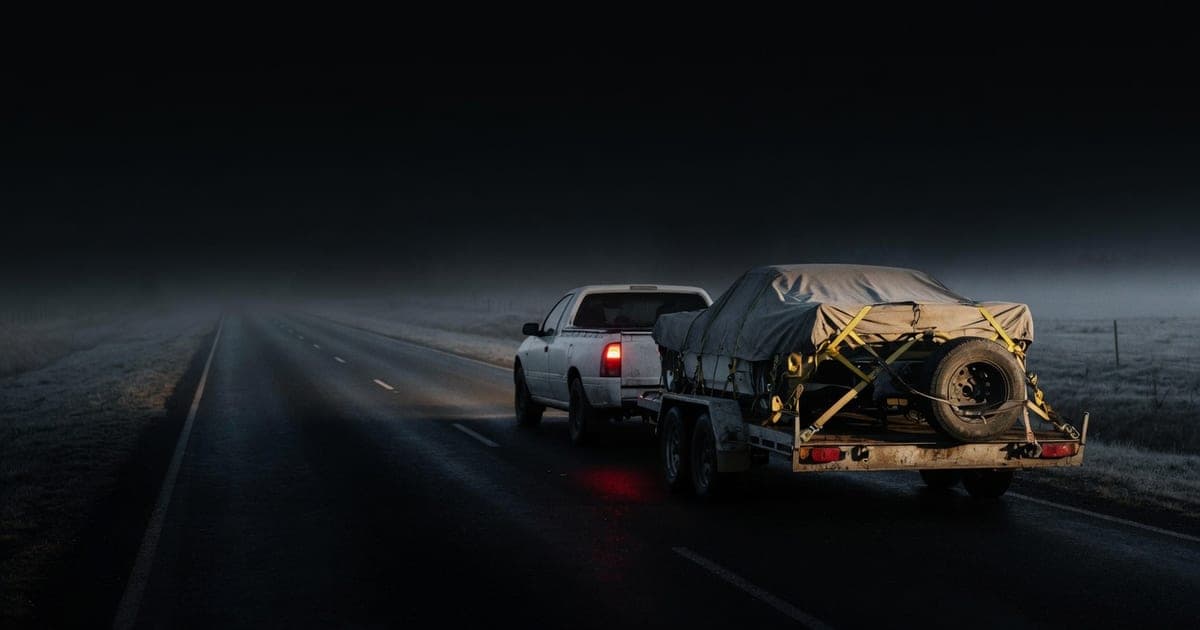
Trailer is the cheap way. Hire commonly runs $27 to $50 an hour with a minimum period, so a local pickup lands around $100 to $150 plus fuel and your time. You need a tow vehicle rated for the load and enough sense to strap the shell at four points, because an empty body is light, high and happy to move around.
Tow truck or tilt tray costs more, commonly a call-out fee from around $99 plus an hourly rate in the $140 to $180 range. It is the answer for a shell that will not roll, a pickup you cannot attend, or a long interstate leg.
The legal side is state-based. Towing an unregistered vehicle on its own wheels behind another vehicle generally requires an unregistered vehicle permit, and using a licensed towing operator avoids that question entirely, which is a genuine reason to pay for the tow. Rules differ by state and change, so confirm with your own transport authority first. Our guide to track-only and unregistered cars covers the permits in detail.
One logistics point people forget: where is it going? A shell in a driveway becomes a fight with a council, a neighbour or a partner within a fortnight. Have the space sorted first.
Where to look
Shells surface through dismantlers, private sellers who ran out of momentum, and builders clearing space. The JDM wreckers directory covers the yards that regularly have shells on the floor, and ring rather than trusting a website, because shells rarely get listed online.
For private sales, watch the current listings for projects and rollers, and for the panels you will inevitably need. Sitting on a shell you are never going to finish? List it free and describe the metal honestly, rust included, because shell buyers who trust a description turn up with a trailer and cash, and the ones who feel misled just waste your Saturday.